
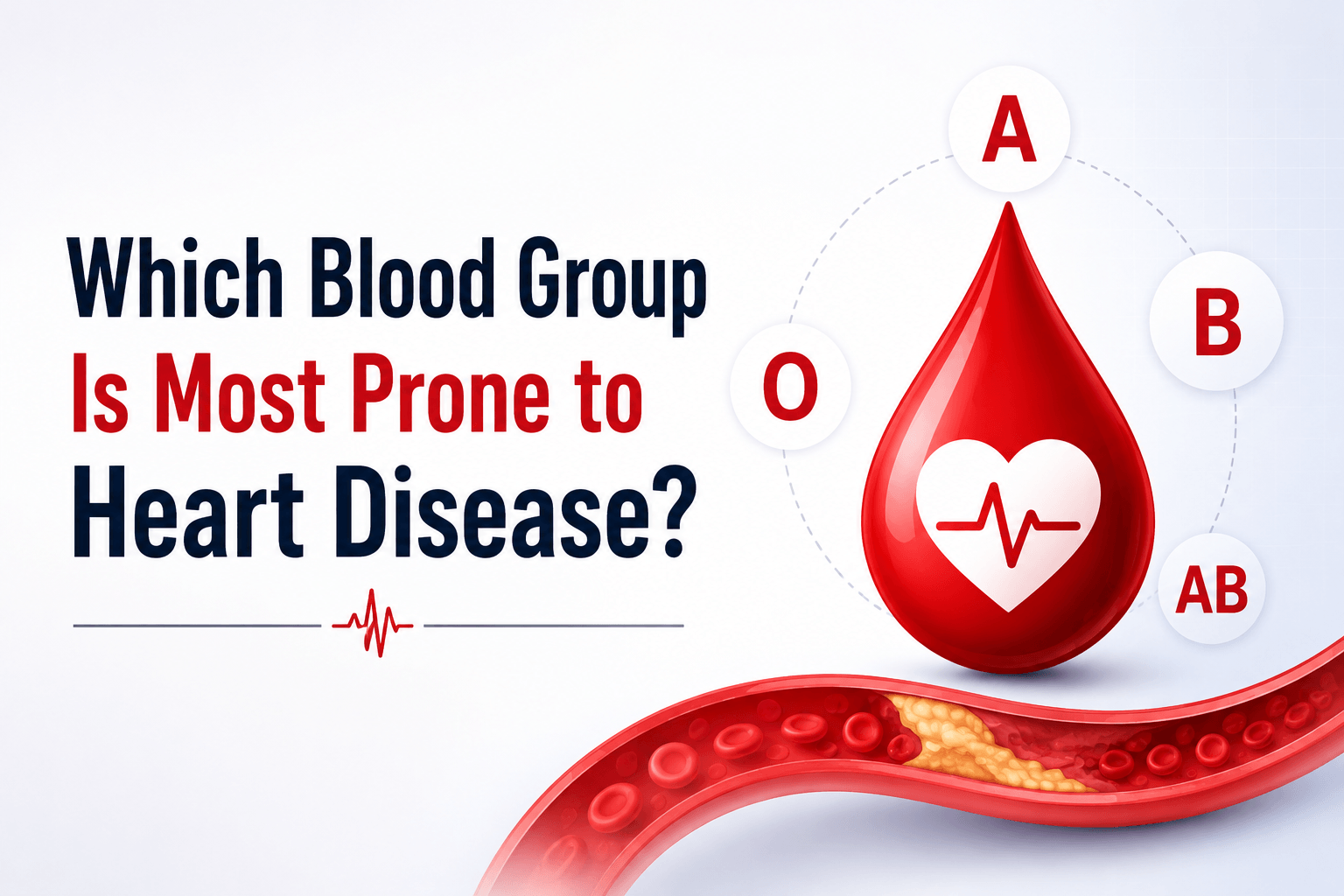
Which Blood Group Is Most Prone to Heart Disease? What Research Actually Says
Heart disease is one of the biggest health concerns in India today.
Almost every family knows someone dealing with:
- High blood pressure
- Heart blockage
- Cholesterol problems
- Stroke
- Heart attack
And recently, people started asking a different kind of question:
“Can my blood group affect my heart health?”
It sounds strange at first. But researchers have actually studied this topic for years.
Some studies suggest certain blood groups may have slightly higher risks for heart disease compared to others.
But before panic starts, here’s the important part:
Your blood group is only one small factor.
Lifestyle still matters way more.
In this guide, we’ll break down:
- Which blood groups may have higher heart disease risk
- What research actually says
- Why clotting matters
- Heart disease risk comparison
- Simple lifestyle tips to protect your heart
If you are new to blood groups, first read our complete beginner guide here:
Blood Groups Explained: Types, Compatibility, Diet & Health Guide
Can Blood Group Really Affect Heart Disease?
The short answer is:
Possibly yes, but only slightly.
Researchers found that people with:
- A blood group
- B blood group
- AB blood group
may have a slightly higher risk of heart disease compared to people with O blood group.
This does not mean:
- you will definitely get heart disease, or
- O blood group people are completely safe.
It simply means certain biological patterns may slightly increase risk.
Which Blood Group Has the Highest Heart Disease Risk?
Research Points Toward Non-O Blood Groups
Several studies suggest that:
- A
- B
- AB
blood groups may show a somewhat higher risk of cardiovascular disease.
Among them, some research has especially highlighted:
- Blood Group A
- Blood Group AB
for slightly increased clotting and inflammation tendencies.
Why?
Scientists believe it may relate to certain proteins involved in blood clotting.
Why Blood Clotting Matters
Heart disease is not only about cholesterol.
Blood clotting also plays a major role.
When clotting becomes abnormal, it may increase the risk of:
- Heart attack
- Stroke
- Blocked arteries
Researchers observed that non-O blood groups often have:
- Higher levels of von Willebrand factor
- Increased clotting proteins
This may slightly raise cardiovascular risk.
But again, the difference is not massive.
Is O Blood Group Better for Heart Health?
Some studies suggest O blood group may have:
-
Slightly lower clotting tendency
-
Lower cardiovascular risk in some cases
But people misunderstand this all the time.
Having O blood group does NOT give immunity against:
- Heart attack
- Obesity
- High BP
- Diabetes
A person with O blood group who:
- smokes daily,
- eats junk food,
- never exercises,
- stays stressed constantly,
can still develop severe heart disease.
Lifestyle beats blood group almost every time.
Heart Disease Risk Comparison by Blood Group
Here’s a simplified understanding based on available studies:
|
Blood Group |
Possible Heart Disease Risk |
|
O |
Slightly Lower |
|
A |
Slightly Higher |
|
B |
Slightly Higher |
|
AB |
Moderate to Higher |
Important:
These are statistical observations, not guaranteed outcomes, understand your ABO blood type in detail.
What Science Actually Says
This part matters a lot.
Most scientific studies use words like:
- “associated with”
- “linked to”
- “slightly increased risk”
That is very different from saying:
“This blood group causes heart disease.”
Health content online often exaggerates these findings for clicks.
Real science is much more careful.
If you want deeper research-based insights about blood groups and disease links, read this guide:
Blood Group and Disease Risk: What Science Actually Says
Why Lifestyle Still Matters More
Let’s make this real.
Imagine two people.
Person A
-
O blood group
- Smokes
- Sleeps 4 hours
- Eats oily food daily
- Never exercises
Person B
- A blood group
- Walks daily
- Eats balanced meals
- Maintains healthy weight
- Avoids smoking
Who is more likely healthier?
Obviously Person B.
That’s why doctors focus much more on:
- cholesterol,
- blood pressure,
- sugar levels,
- weight,
- physical activity,
than blood group alone.
Other Factors That Increase Heart Disease Risk
These are far more dangerous than blood group:
Smoking
One of the biggest causes of heart disease.
High Cholesterol
Builds plaque in arteries over time.
Diabetes
Increases damage to blood vessels.
Obesity
Raises pressure on the heart.
Stress
Chronic stress affects blood pressure and inflammation.
Lack of Exercise
Sedentary lifestyle is now a major problem in urban India.
Can Blood Donation Help Heart Health?
Some studies suggest regular blood donation may help maintain healthy iron balance in certain people.
But this does not mean:
blood donation is a treatment for heart disease.
Still, donating blood regularly:
- helps others,
- supports emergency healthcare,
- improves awareness.
If you want to understand universal blood donation better, read this guide:
Which Blood Group Can Donate to All and Receive from All?
What About Rare Blood Groups?
Rare blood groups like Bombay Blood Group are medically important during emergencies.
But there is no strong evidence showing they directly cause heart disease.
Learn more here:
What Is the Rarest Blood Group in India and Why?
Best Lifestyle Tips for Heart Health
No matter your blood group, these habits help protect your heart.
1. Walk Daily
Even 30 minutes matters.
2. Eat Balanced Meals
Reduce processed foods and excess sugar.
3. Avoid Smoking
Probably the single best thing you can do for your heart.
4. Sleep Properly
Poor sleep affects blood pressure and stress hormones.
5. Control Stress
Meditation, yoga, hobbies, and exercise help more than people realize.
6. Get Regular Checkups
Check:
- cholesterol,
- blood sugar,
- blood pressure,
- heart health markers.
Common Myths About Blood Groups and Heart Disease
Myth 1: O blood group people never get heart attacks
False.
Lifestyle factors still matter heavily.
Many people don't even know what blood group they are. If that's you, start here how to check your blood group at home without a lab test.
Myth 2: Blood group decides lifespan
No scientific proof.
Myth 3: Heart disease depends mainly on genetics
Wrong.
Daily habits are extremely important too.
Myth 4: Blood group alone predicts future health
Not true.
It is only one small factor.
FAQs
Which blood group has the highest heart disease risk?
Some studies suggest A and AB blood groups may have slightly higher cardiovascular risk.
Which blood group has the lowest heart disease risk?
Research often points to O blood group having slightly lower clotting-related risk.
Can O blood group people get heart disease?
Absolutely yes. Poor lifestyle can increase heart disease risk regardless of blood type.
Does blood group affect cholesterol?
Not directly, though some clotting and inflammation differences may exist.
Should I worry about my blood group and heart disease?
No need to panic. Focus more on healthy habits and regular health checkups.
Final Thoughts
Blood group research is interesting. And yes, science has found some links between blood types and heart disease risk.
But those links are usually small.
The biggest heart disease causes are still:
- smoking,
- poor diet,
- obesity,
- inactivity,
- stress,
- uncontrolled diabetes.
So instead of worrying whether your blood group is “bad,” focus on the things you can control every day.
That’s what truly protects your heart long-term.
Suggested Articles
 Ayurvedic Tips
Unlock Youth: 4 Cellular Health Markers You MUST Know for Anti-Aging Success
Read Article arrow_forward
 Home Remedies
Best Home Remedies for Cold and Cough That Actually Work
Sneezing, sore throat, blocked nose? These tried-and-tested home remedies for cold and cough use ingredients already ...
Read Article arrow_forward
Ayurvedic Tips
Ayurvedic Tips