

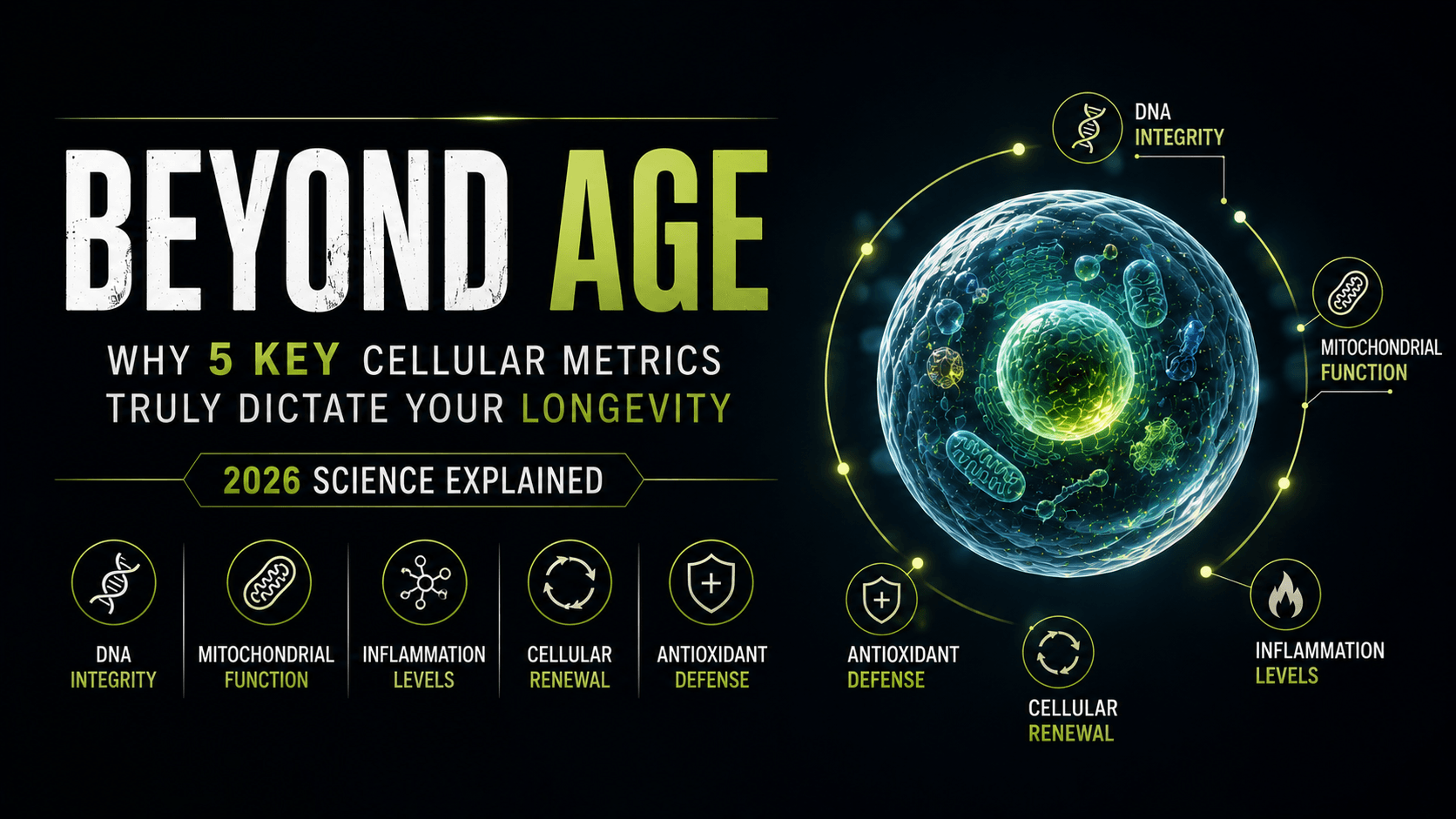
Beyond Age: Why 5 Key Cellular Metrics Truly Dictate Your Longevity (2026 Science Explained)
Here at Sehat Raaz, we believe that understanding your health goes far beyond the number of candles on your birthday cake. While chronological age simply marks the passage of time since you were born, the cutting-edge science of 2026 is unequivocally shifting our focus to a more profound indicator: your biological age. This isn't just a buzzword; it’s a critical measure of how your body’s cells, tissues, and organs are truly functioning and aging at a molecular level.
We’ve systematically analyzed the latest advancements in longevity research to bring you insights that simplify complex health information. For too long, we’ve been told that aging is an inevitable, uniform decline. However, new discoveries reveal that aging is a highly individual process, deeply influenced by genetics, lifestyle, and environmental factors. In fact, two people born on the same day can have biological ages that diverge by a decade or more, with real consequences for disease risk, cognitive function, and overall vitality.
This article will delve into five key cellular metrics that, according to the science of 2026, truly dictate your longevity and healthspan. Understanding these metrics isn’t just academic; it’s actionable. It empowers you to make smarter, healthier life decisions every day, moving beyond the traditional constraints of chronological age and towards a future of extended vitality.
The Shifting Paradigm: From Chronological to Biological Age
For most of modern medicine, age has been treated as a fixed input. You are 48, or 55, or 62, and your physician often uses reference ranges built for your decade of life. The implicit assumption has been that chronological age and biological age track together closely enough that the distinction doesn't significantly matter. We now know this assumption doesn't hold up to scrutiny. Biological age reflects the functional state of your tissues, cells, and organ systems relative to population norms, and this number is far more predictive of healthspan, disease risk, and longevity than chronological age.
The concept of "biological age" is revolutionizing how we approach health and wellness. It represents the molecular level of 'wear and tear' on your body and can be measured through various techniques, from standard blood tests to advanced DNA methylation analysis. The significant development in 2026 is that biological age testing has transitioned from a research curiosity to a clinical tool that allows forward-thinking physicians and individuals to incorporate it into comprehensive longevity evaluations. If your biological age is higher than your chronological age, it's a clear health alert, indicating your body's cells are aging more rapidly than anticipated and highlighting an urgent need for lifestyle modifications.
The Five Pillars of Cellular Longevity: What Science Says in 2026
We've identified five key cellular metrics that are at the forefront of longevity research in 2026. These aren't isolated factors; they interact in complex ways to determine your overall biological age and healthspan.
1. Telomere Length and Integrity
Imagine the plastic tips on your shoelaces; that's essentially what telomeres are for your chromosomes. These protective caps at the ends of your DNA strands play a critical role in maintaining chromosomal integrity during replication. Every time a human cell divides, these telomeres get a little shorter. Once they shrink too far, the cell perceives the exposed chromosome ends as DNA damage and stops dividing, entering a state known as replicative senescence. Shorter telomeres have been associated with a variety of age-related diseases, including cardiovascular disease, cancer, and neurological disorders.
In 2026, research continues to affirm telomere attrition as a core hallmark of biological aging. However, the scientific news is that telomere dynamics may be more malleable than once believed. Clinical studies published in 2025 showed that certain interventions could lead to measurable telomere elongation in adults, challenging the assumption that adult telomere shortening is irreversible. Lifestyle interventions, including a whole-foods anti-inflammatory diet, regular cardiovascular exercise, stress reduction, and optimized sleep, can increase telomerase activity (the enzyme that rebuilds telomeres) and help preserve telomere length. While commercial telomere testing alone is no longer considered the gold standard for measuring biological age due to its complexity and variability, maintaining telomere health remains a crucial aspect of cellular longevity.
2. Mitochondrial Function and Biogenesis
Often dubbed the "powerhouses of the cell," mitochondria are far more than just energy producers. They are master regulators of cellular and systemic health, underpinning nearly every biological process required for sustained vitality. Their performance influences energy production, effective cellular repair, controlled inflammation, and metabolic homeostasis.
The longevity landscape in 2026 recognizes mitochondrial dysfunction as a primary hallmark of aging and a driver of age-related diseases. As we age, mitochondria undergo a progressive decline, leading to reduced energy output, increased production of damaging reactive oxygen species, and impaired ability to generate new, healthy mitochondria (biogenesis) or remove damaged ones (mitophagy). This decline contributes to fatigue, weight gain, and amplifies oxidative damage, which is implicated in 90% of chronic conditions. Excitingly, research in 2026 highlights that improving mitochondrial organization and efficiency represents a promising strategy for extending healthspan. For example, a recent study identified that declining levels of phosphatidylcholine, a membrane lipid, contribute to age-related mitochondrial dysfunction, and boosting this nutrient could restore more youthful mitochondrial performance.
3. Cellular Senescence (Zombie Cells)
There comes a moment when a human cell stops dividing but doesn't die. Instead, it persists in a "zombie-like" state, metabolically active but reproductively frozen. These are senescent cells, and they secrete a cocktail of inflammatory signals that slowly poison the surrounding tissue, contributing to chronic disease and other age-related conditions. While naturally cleared by the immune system in younger individuals, their accumulation increases with age as immune function declines.
In 2026, understanding cellular senescence is no longer purely academic; it's a major target for clinical trials and geroscience, which treats aging itself as a modifiable disease process. The National Institutes of Health (NIH) launched the Cellular Senescence Network (SenNet) program to identify and characterize senescent cells across the human body, aiming to build the first comprehensive atlas of these cells. This foundational step is crucial for developing new therapies that could diminish the impact of aging by targeting harmful senescent cells. Senolytic drugs, designed to selectively remove these "zombie cells," have shown promise in animal models and are progressing in human trials, offering potential improvements in health outcomes.
4. Autophagy and Cellular Housekeeping
Think of autophagy as your body's highly efficient recycling program. This vital cellular process, literally meaning "self-eating," is essential for maintaining cellular quality control and adaptive stress responses. It recycles old or damaged cellular components, such as misfolded proteins and worn-out mitochondria, allowing cells to survive nutrient deprivation and maintain metabolic homeostasis.
Autophagic activity generally declines with age, leading to the accumulation of damaged proteins and dysfunctional organelles. This impaired cellular housekeeping contributes to neurodegenerative diseases like Alzheimer's and Parkinson's, as well as overall age-related decline. The good news from 2026 research is that enhancing autophagy is considered a promising intervention to modulate aging. Many longevity interventions, including dietary restriction (like intermittent fasting), regular regular exercise, adequate sleep, and certain pharmacological agents, are known to induce autophagy and extend lifespan and healthspan. We can proactively support our cellular recycling systems to prevent the buildup of cellular junk that accelerates aging.
5. Epigenetic Modifications (The Control Panel of Your Genes)
Your DNA is your genetic blueprint, but epigenetics is the instruction manual that tells your genes when and how to express themselves. These epigenetic modifications are chemical tags on your DNA that switch genes on or off, without changing the underlying genetic sequence. These patterns shift over time and are profoundly shaped by your lifestyle and environment.
Epigenetic clocks, which analyze DNA methylation patterns, have emerged in 2026 as among the most robust and predictive tools for measuring biological age. They outperform older metrics like telomere length in predicting mortality and healthspan. These clocks can measure not just where your biology is, but also how fast it is changing. Newer generations of epigenetic clocks, such as GrimAge, DunedinPACE, and PhenoAge, provide insights into all-cause mortality risk, the current rate of biological aging, and even organ-specific aging. This level of detail allows for precise tracking of whether longevity protocols are working at the cellular level and offers actionable insights for personalized interventions. The research supports meaningful plasticity in the rate of biological aging based on consistent lifestyle choices.
Comparing Key Cellular Markers of Aging
To further clarify the distinct roles of these crucial cellular metrics, we've compiled a comparison of their primary functions and impact on longevity:
| Cellular Metric | Primary Role in Longevity | Impact of Decline | Measurement Method (2026) |
|---|---|---|---|
| Telomere Length & Integrity | Protects chromosome ends during cell division, preventing DNA damage signals. | Triggers cellular senescence, linked to age-related diseases like cardiovascular issues and cognitive decline. | DNA analysis; considered a general marker rather than primary biological age predictor. |
| Mitochondrial Function & Biogenesis | Generates cellular energy (ATP), regulates metabolism, and controls inflammation. | Reduced energy, increased oxidative stress, metabolic dysfunction, and acceleration of age-related diseases. | Cellular assays for ATP production, oxygen consumption, and mitochondrial DNA integrity. |
| Cellular Senescence | Temporary defense mechanism against damaged cells (in young age). | Accumulation of "zombie cells" that secrete inflammatory factors, damaging surrounding tissues and promoting chronic diseases. | Identification of senescent cell markers in tissue samples (e.g., SA-?-gal, p16INK4a); comprehensive atlases emerging. |
| Autophagy & Cellular Housekeeping | Recycles damaged cellular components and misfolded proteins, maintaining cellular health and homeostasis. | Accumulation of cellular debris, impaired function, neurodegeneration, and increased susceptibility to age-related pathologies. | Monitoring of autophagosome formation and flux (e.g., LC3-II levels); challenges remain in human research. |
| Epigenetic Modifications | Controls gene expression patterns, influencing cellular identity and function without altering DNA sequence. | Dysregulated gene expression, impaired cellular responses, and accelerated biological aging evident in epigenetic clock readings. | DNA methylation analysis (e.g., GrimAge, DunedinPACE, PhenoAge clocks) from blood or saliva samples. |
Beyond the Lab: Actionable Steps for Cellular Health
Understanding these cellular metrics is powerful, but the true impact comes from applying this knowledge to our daily lives. We’ve found that the variables with the strongest evidence for improving biological age markers are often the least complicated, yet profoundly effective.
- Prioritize Quality Nutrition: A protein-adequate, anti-inflammatory diet rich in whole foods, fruits, and vegetables provides the necessary building blocks and antioxidants to support cellular repair and reduce oxidative stress. Intermittent fasting or caloric restriction, when done safely and effectively, can activate autophagy and improve mitochondrial health. For more insights into optimizing your diet, explore our resources on healthy eating habits.
- Embrace Regular Physical Activity: Regular exercise, combining both resistance and aerobic training, is perhaps the most potent single lever for reducing biological age across multiple measurement systems. It boosts mitochondrial biogenesis, enhances autophagy, and can even preserve telomere length.
- Master Stress Management: Chronic stress leads to inflammation and hormonal imbalances that accelerate cellular aging. Implementing effective stress management techniques such as meditation, yoga, mindfulness, or spending time in nature is crucial. These practices reduce inflammatory burden and support overall cellular resilience.
- Optimize Sleep: Quality sleep is non-negotiable for cellular repair and regeneration. During sleep, your body cleanses cellular debris, consolidates memories, and repairs damage, all of which contribute to a younger biological age. Aim for 7-9 hours of uninterrupted, high-quality sleep nightly.
- Consider Targeted Supplements (with guidance): While lifestyle changes are foundational, certain supplements may support cellular health. For instance, compounds that activate sirtuins (proteins that orchestrate cellular longevity) or enhance NAD+ levels, which decline with age and impact mitochondrial function, are areas of active research. Always consult a healthcare professional before adding new supplements to your routine.
The good news is that these interventions are effective, even if you start later in life. Changes made in your 40s and 50s can still produce measurable improvements in biological age markers.
Conclusion
The science of 2026 has brought us to an exciting frontier where we can move beyond simply counting years and instead focus on the intricate molecular dance within our cells that truly determines our longevity. By understanding and actively influencing key cellular metrics – telomere length, mitochondrial function, cellular senescence, autophagy, and epigenetic modifications – we gain unprecedented control over our health trajectory.
As your trusted source for health and wellness, Sehat Raaz is committed to simplifying these profound insights. We’ve learned that the secret to a longer, healthier life isn't hidden in a single breakthrough, but in the consistent, informed choices we make every day to support our cellular well-being. By integrating these scientific understandings into your lifestyle, you’re not just adding years to your life, but adding life to your years, ensuring a vibrant and fulfilling healthspan.
For further reading on the critical role of cellular mechanisms in aging, we recommend exploring the comprehensive overview provided by the National Institutes of Health on cellular senescence. Additionally, a Harvard study on genetic clocks and biological age offers deeper insights into the measurement of aging at a molecular level.
Suggested Articles
 Ayurvedic Tips
Best Ayurvedic Drinks for Digestion and Bloating After Meals
Your dadi knew these. Science is slowly catching up. Here are the drinks that actually fix that uncomfortable post-me...
Read Article arrow_forward Ayurvedic Tips
Alexandria Fitness Studio Revolutionizes Workouts with AI Technology
Discover how a cutting-edge fitness studio in Alexandria is leveraging artificial intelligence to personalize trainin...
Read Article arrow_forward
Ayurvedic Tips
PCOS Conception Code: 5 Diet & Lifestyle Keys for Fertility
Unlock your path to pregnancy with PCOS. This guide reveals 5 essential diet & lifestyle changes to boost fertility a...
Read Article arrow_forward
Ayurvedic Tips
Anxiety Breakthrough: 7 Instant Home Remedies to Calm Panic
Feeling overwhelmed by anxiety or panic attacks? Discover 7 instant home remedies to calm panic and reclaim control o...
Read Article arrow_forward