
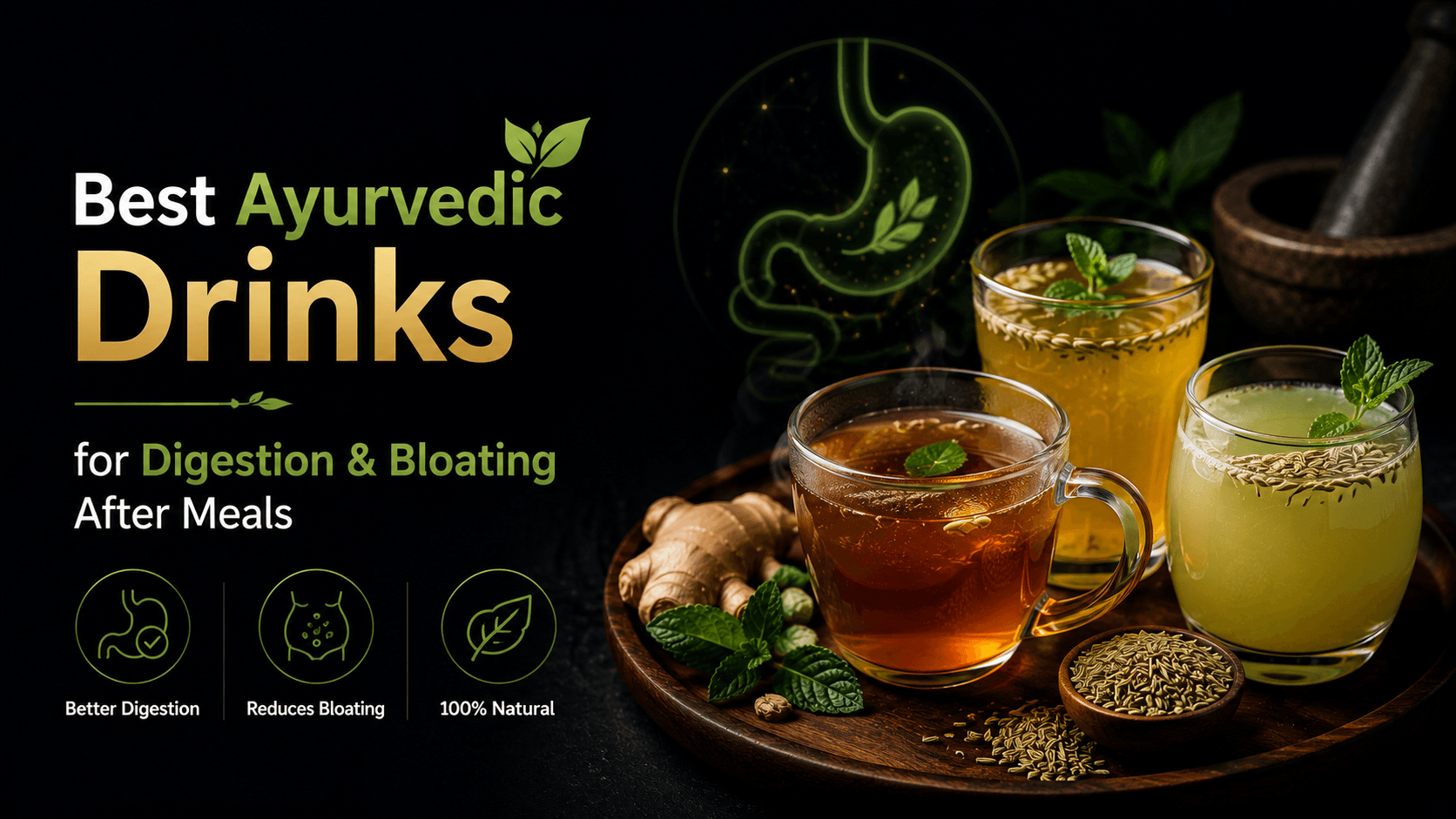
Best Ayurvedic Drinks for Digestion and Bloating After Meals
You finish a big lunch. Dal, rice, sabzi, maybe a little dessert. And then it starts. That tight, uncomfortable, "why did I eat so much" feeling in your stomach. You know the one.
Most of us reach for an antacid. Some pop a digestive pill. But for thousands of years, Indian households had a simpler answer, one that was always sitting in the kitchen: the right drink, made from the right spices, sipped at the right time.
These are not just old wives' tales. Ayurvedic drinks for digestion work because the herbs in them are genuinely carminative, meaning they help release trapped gas, stimulate digestive enzymes, and calm an irritated gut. Modern research has started validating what Ayurveda already knew.
So if you want to know which ayurvedic drink after meals actually helps, here are the best ones, how to make them, and exactly when to drink them.
"In Ayurveda, your digestive fire called Agni is the foundation of health. Feed it right, and everything else follows."
Why Bloating Happens After Meals
Before we get into the drinks, a quick word on why bloating actually happens. It is not always about eating too much. Sometimes it is the combination of foods, the speed at which you eat, your body's current Agni (digestive fire), or something as simple as drinking too much cold water during a meal.
Ayurveda says that weak Agni leads to Ama undigested food residue that creates heaviness, gas, and discomfort in the gut. The goal of most digestive drinks is not to mask the problem, it is to kindle that fire and help your gut process food more efficiently.
Now, on to the good stuff.
Best Ayurvedic Drinks for Digestion and Bloating
These are the six most effective natural digestion remedies you can make at home, most of them in under five minutes.
1 Jeera (Cumin) Water
The classic post-meal fix
Jeera water is probably the most well-known ayurvedic drink for digestion in Indian households. Cumin contains a compound called thymol that stimulates salivary glands and digestive enzyme secretion even before food hits your stomach. It helps reduce gas, ease nausea, and improve bile production, which breaks down fats.
If you have had an oily meal or feel heavy after eating fried food, jeera water is your best friend. It is also mentioned in AYUSH dietary guidelines as a traditional digestive aid.
How to Make It
-
Boil 1 teaspoon of jeera (cumin seeds) in 2 cups of water for 5 minutes
-
Strain into a cup
-
Add a small squeeze of lemon if you like a little brightness
-
Sip warm, after meals
Best time: 15–20 minutes after meals
2 Ajwain (Carom Seeds) Water
For gas, acidity, and heaviness
Ajwain is one of the most powerful home remedies for bloating in Ayurveda. It contains thymol, which enhances gastric juice secretion and helps break down heavy, dense food. From an Ayurvedic lens, ajwain kindles Agni and is especially helpful when the body feels heavy or cold after eating.
If your stomach feels tight and nothing is moving, ajwain water can give relief within 20 to 30 minutes. It also works well for acidity when combined with a pinch of black salt.
How to Make It
-
Add 1 teaspoon of ajwain to 1.5 cups of water
-
Boil for 5 to 7 minutes until water turns slightly golden
-
Strain and add a pinch of black salt (kala namak)
-
Sip slowly while warm
Best time: Right after heavy meals or when feeling gassy
3 Saunf (Fennel) Tea
Cooling and calming for the gut
You know those little fennel seed bowls at the restaurant exit? That is not just a mouth freshener. Saunf is genuinely useful for digestion. Fennel helps relax the smooth muscles of the gastrointestinal tract, which makes it especially good for cramping, IBS-related discomfort, and sluggish digestion after a big meal.
Unlike jeera and ajwain, which are warming, fennel is cooling. This makes it perfect for summer months or for people with Pitta imbalance who tend toward acidity and heat-related bloating. Ayurveda calls fennel a tridoshic spice, meaning it balances all three doshas.
How to Make It
-
Lightly crush 1 teaspoon of saunf (fennel seeds)
-
Add to 1.5 cups of water and boil for 5 minutes
-
Strain and sip warm
-
Optional: add a few tulsi leaves for extra anti-inflammatory benefit
Best time: After lunch or dinner, especially in summer
4 Jeera-Ajwain-Saunf Water (The Triple Combo)
Most effective for serious bloating
If one of these spices is good, all three together are even better. This triple-seed drink combines the enzyme-activating power of jeera, the Agni-kindling quality of ajwain, and the muscle-relaxing effect of saunf. It is beautifully balanced because the cooling nature of fennel offsets the heat of ajwain and cumin.
Many Ayurvedic practitioners and nutritionists recommend this as a daily digestive drink, not just for bloating but for overall gut health and weight management. You can make a larger batch and sip it warm through the day.
How to Make It (1 litre batch)
-
Combine 1.5 tsp ajwain, 1 tbsp jeera, and 1 tbsp saunf in 1 litre of water
-
Bring to a boil, then simmer until reduced to about 700 ml
-
Cool to room temperature or strain into a glass bottle
-
Sip warm through the day, especially after meals
Best time: After any heavy meal, or sipped warm through the day
5 Chaas (Spiced Buttermilk)
Probiotic-rich and gut-friendly
Chaas is probably the most culturally embedded digestive drink in Indian food culture. There is a reason every thali in Rajasthan, Gujarat, and across the subcontinent comes with a glass of chaas. It is light, cooling, probiotic-rich, and helps restore good gut bacteria after a meal. Ayurveda says chaas pacifies Pitta dosha and is ideal after the main afternoon meal.
The combination of curd, roasted cumin, and rock salt works together to support Agni, reduce acidity, and ease that post-lunch heaviness. If you eat a heavy lunch daily, making this a routine drink can genuinely improve your digestive health over time.
How to Make It
-
Take half a cup of fresh curd (dahi) and 3/4 cup of water
-
Whisk until smooth and frothy
-
Add 1/2 tsp roasted jeera powder, a pinch of rock salt (sendha namak), and a few coriander leaves
-
Drink at room temperature, not cold
Best time: After lunch Ayurveda specifically recommends chaas at midday
6 Ginger-Lemon-Honey Warm Water
Stimulates Agni before and after meals
Ginger is one of the most studied Ayurvedic herbs for digestion. It stimulates Agni, speeds up gastric emptying (how quickly food moves from the stomach to the small intestine), and reduces nausea. Combined with lemon for its acidity and honey for its soothing quality, this makes a powerful but gentle digestive drink.
This one works well both before a heavy meal (to prepare the stomach) and after (to ease digestion). It is especially useful in winter months when digestion naturally becomes slower.
How to Make It
-
Grate or juice about half an inch of fresh ginger
-
Mix with 1 cup of warm (not boiling) water
-
Add juice of half a lemon and 1 teaspoon of raw honey
-
Stir and sip slowly
Best time: 15 minutes before a heavy meal, or 30 minutes after
Quick Reference: Which Drink for Which Problem
|
Your Problem |
Best Ayurvedic Drink |
When to Have It |
|
Gas and bloating after meals |
Jeera-Ajwain-Saunf water |
Right after meals |
|
Acidity or heartburn |
Saunf tea or chaas |
After lunch or dinner |
|
Heaviness after fried food |
Jeera water with lemon |
20 min after meals |
|
Slow digestion in winter |
Ginger-lemon-honey water |
Before or after meals |
|
Post-lunch sluggishness |
Spiced chaas (buttermilk) |
Right after lunch |
|
Daily gut maintenance |
Triphala warm water |
At night before bed |
|
IBS or cramping |
Saunf (fennel) tea |
After meals, warm |
A Word on Triphala Water
Triphala deserves its own mention. It is a classical Ayurvedic formulation made from three fruits Amla, Haritaki, and Bibhitaki. It is one of the most widely used Ayurvedic preparations for digestive health, colon support, and detoxification. Triphala is not a drink you have after a single heavy meal. It is a long-term gut health tonic.
To use it, soak 1 teaspoon of Triphala powder in a glass of warm water overnight and drink it the next morning on an empty stomach, or take it warm before bed. Give it 2 to 3 weeks of consistent use before judging the results. It works slowly but deeply.
Pair this routine with mindful eating habits. If you want to understand how your specific body type and blood group may respond differently to certain foods, reading up on blood group and food habits can give you a genuinely useful perspective on why some foods feel heavier for you than others.
Common Mistakes That Make Bloating Worse
-
Drinking cold water during or right after meals it weakens Agni
-
Lying down immediately after eating give your stomach at least 30 minutes
-
Eating too fast poor chewing means more undigested food in the gut
-
Mixing too many food types in one meal especially fruits with cooked food
-
Using fizzy drinks like soda or cola to "settle" the stomach these make bloating worse
-
Skipping meals and then overeating irregular meal timing confuses Agni
Ayurvedic Eating Tip
A short 10 to 15 minute walk after a meal not a jog, just a gentle walk is one of the simplest things you can do for digestion. Ayurveda calls it Shatapavali. Modern gastroenterology agrees it helps speed up gastric motility.
Does Your Diet Type Affect Digestion?
It often does. If you follow a vegetarian diet and wonder why legumes like chana or rajma cause bloating, the answer often lies in how they are prepared and combined. Soaking lentils overnight, adding ajwain or hing to the tadka, and avoiding combining them with dairy can reduce gas significantly.
If you are looking for a structured guide on eating for better gut health and weight management, the vegetarian diet chart for weight loss on Sehat Raaz is a well-organised resource that breaks down food combinations and portion guidance in a practical, usable format.
Are These Drinks Safe to Have Every Day?
For most healthy adults, yes. Jeera water, saunf tea, chaas, and ginger water are all safe to consume daily in the amounts recommended above. They are food-grade ingredients in small quantities, not medicine in large doses.
That said, if you have a chronic digestive condition like IBS, Crohn's disease, or GERD, check with your doctor before adding concentrated herbal drinks to your daily routine. Ajwain in large amounts can irritate an already inflamed gut. Start small and observe how your body responds.
The Takeaway
You do not need expensive supplements or complicated protocols to fix post-meal bloating. The best ayurvedic drinks for digestion are made from ingredients that cost almost nothing and have been used in Indian kitchens for centuries.
Start with one. Pick the jeera water, or the chaas after lunch, or the ginger-lemon drink on an empty morning stomach. Give it two weeks of consistency. Your gut will notice the difference before you do.
And if you want to build a fuller picture of your health, from what you eat to how your body responds, exploring more guides on Sehat Raaz is a good next step. The site covers Ayurvedic tips, nutrition, home remedies, and diet plans with a genuinely practical approach for Indian readers.
Want More Ayurvedic Health Tips?
Sehat Raaz covers practical, science-backed wellness guides for the Indian reader from Ayurvedic home remedies to nutrition, diet charts, and lifestyle tips.
Suggested Articles
 Ayurvedic Tips
Master IBS: 6 Quick & Easy Low FODMAP Recipes for Relief
Struggling with IBS? Discover 6 delicious and simple low FODMAP recipes that can help you manage symptoms and improve...
Read Article arrow_forward
Ayurvedic Tips
Reclaim Your Rest: 7 Ancient Ayurvedic Practices for Deep Sleep
Struggling to sleep? Discover 7 ancient Ayurvedic practices to help you achieve deep, serene sleep tonight. Improve y...
Read Article arrow_forward Fitness
Former Navy SEAL DJ Shipley, 41, Shares His Simple Daily Formula for Staying Fit for Life
Former Navy SEAL DJ Shipley reveals the daily habits, workouts, and mindset that help him stay fit at 41. Learn pract...
Read Article arrow_forward
Ayurvedic Tips