
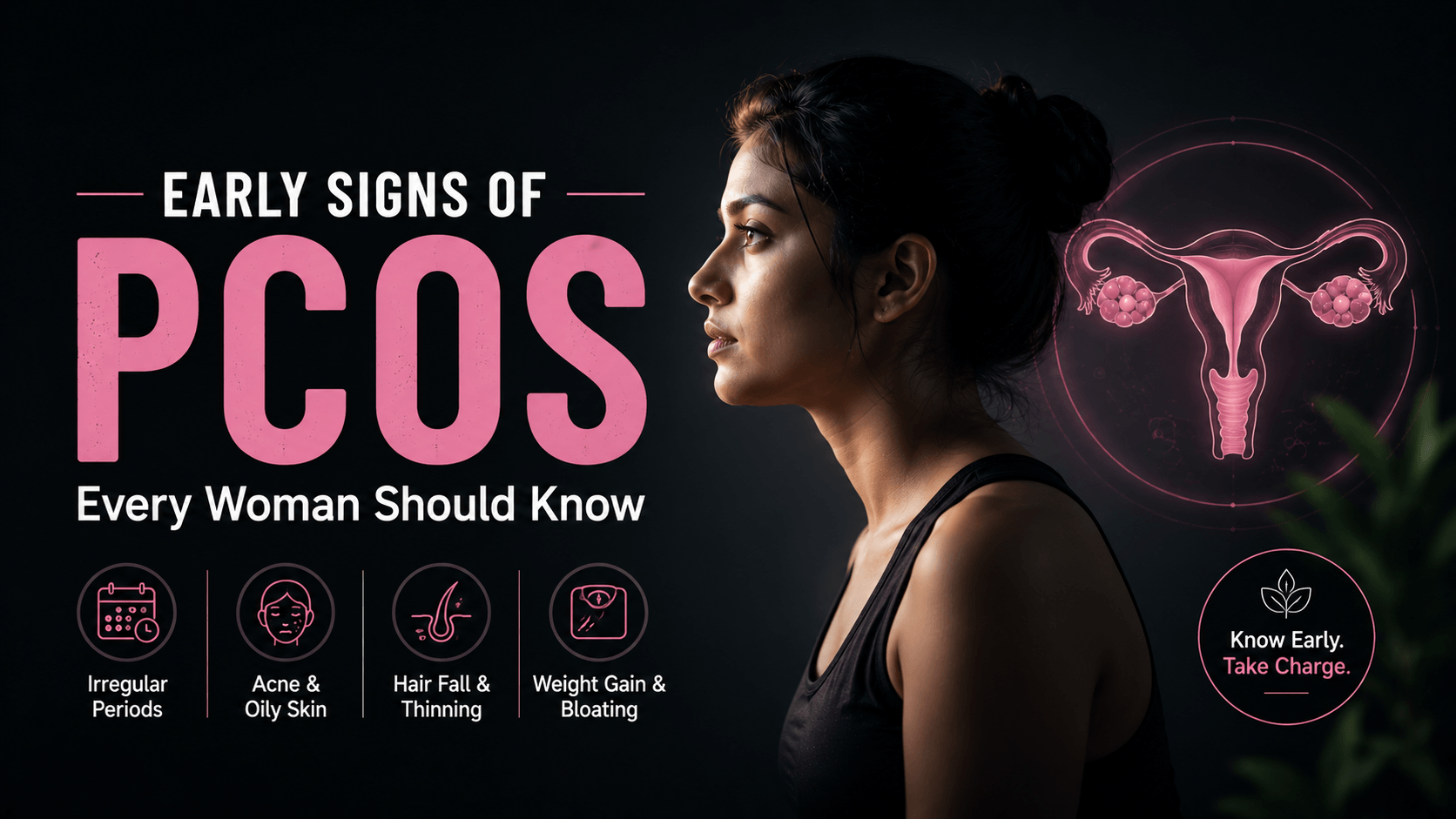
How to Identify the Early Warning Signs of PCOS in Women
A friend mentions her periods have been all over the place for months. Another talks about acne that won't go away no matter what she tries, despite being well past her teenage years. Someone else can't figure out why she's gaining weight even though nothing about her diet has changed.
These conversations happen all the time among women, usually framed as separate, unrelated annoyances. "My skin is just like this." "Maybe it's stress." "I've just always had irregular periods."
But often, these aren't separate issues. They're connected. And the connection is something many women live with for years before getting a name for it: Polycystic Ovary Syndrome, or PCOS.
PCOS is one of the most common hormonal conditions in women of reproductive age, and one of the most under-diagnosed. Recognizing the early signs of PCOS can make the difference between years of confusion and getting the right support early.
What Is PCOS, Really?
PCOS is a hormonal condition where the ovaries produce higher than typical levels of androgens (male hormones that women also produce in smaller amounts). This hormonal imbalance disrupts ovulation, affects metabolism, and shows up in the body through a wide range of symptoms some obvious, many not.
Despite the name, PCOS doesn't always involve visible cysts on the ovaries. The name reflects how the condition was originally described, but doctors now understand it as a broader metabolic and hormonal disorder, not simply an ovarian issue.
In India, studies estimate that PCOS affects between 1 in 5 and 1 in 10 women of reproductive age, though many remain undiagnosed for years because the symptoms are mistaken for unrelated, individual problems.
Early Signs of PCOS Every Woman Should Know
1. Irregular or Missed Periods
This is usually the first and most noticeable sign. PCOS disrupts ovulation, which means periods may come late, arrive unpredictably, last longer or shorter than usual, or stop altogether for months at a time.
Some women experience cycles longer than 35 days. Others have fewer than eight periods a year. The pattern varies, but the common thread is unpredictability that doesn't resolve over several cycles.
It's worth noting that occasional irregularity from stress, travel, or illness is normal. PCOS-related irregularity tends to be a persistent pattern over several months, not a one-time occurrence.
2. Excess Facial and Body Hair (Hirsutism)
Elevated androgen levels can cause increased hair growth in areas where women typically have minimal hair chin, upper lip, chest, lower abdomen, and back. This is called hirsutism, and it's one of the more visible signs of hormonal imbalance symptoms linked to PCOS.
This is different from the fine, light hair most women naturally have in these areas. PCOS-related hair growth tends to be coarser, darker, and more noticeable, often appearing gradually over months or years.
3. Persistent Acne, Especially Along the Jawline
Hormonal acne caused by PCOS has a distinct pattern. It tends to cluster along the jawline, chin, and lower cheeks, often appears as deep, cystic breakouts rather than surface-level pimples, and persists well beyond the teenage years into the late twenties, thirties, and beyond.
If acne suddenly worsens in adulthood, doesn't respond to typical skincare or topical treatments, and follows a hormonal pattern tied to the menstrual cycle, it's worth discussing with a doctor as a possible PCOS symptom rather than treating it as a purely dermatological issue.
4. Thinning Hair on the Scalp
While PCOS can cause excess hair growth on the face and body, it often causes the opposite effect on the scalp. Elevated androgens can trigger a pattern of hair thinning similar to male-pattern baldness most noticeable at the crown and along the part line.
This symptom is frequently mistaken for stress-related hair fall or nutritional deficiency, which delays the connection to an underlying hormonal cause.
5. Unexplained Weight Gain, Especially Around the Abdomen
Many women with PCOS notice weight gain that feels disproportionate to their diet and activity level, often concentrated around the abdomen rather than distributed evenly across the body.
This happens because PCOS is closely linked to insulin resistance a condition where the body's cells don't respond efficiently to insulin, leading to higher circulating insulin levels. This, in turn, promotes fat storage, particularly in the abdominal region, and makes weight loss significantly more difficult than it would be without the underlying hormonal imbalance.
This connects to broader patterns of stubborn abdominal fat, which has multiple potential causes beyond PCOS. The Why Belly Fat Is Hard to Lose and What Actually Works article explains the biology of visceral fat and insulin resistance in more depth, which is directly relevant for women managing PCOS-related weight changes.
6. Skin Darkening in Body Folds (Acanthosis Nigricans)
This is a lesser-known but important sign. Insulin resistance associated with PCOS can cause patches of dark, thickened, velvety skin to develop in body folds commonly the back of the neck, armpits, groin, and under the breasts.
This symptom is a visible marker of insulin resistance and is often one of the more reliable early signals that an underlying metabolic issue, like PCOS, may be present.
7. Difficulty Losing Weight Despite Effort
This deserves its own mention separate from general weight gain, because it's one of the most frustrating and least understood symptoms for women living with undiagnosed PCOS.
Insulin resistance doesn't just promote weight gain. It actively works against weight loss efforts, even with a calorie deficit and regular exercise. Many women describe trying everything cutting carbs, exercising daily, eating clean with minimal results, long before they understand that an underlying hormonal condition is working against their efforts.
This is not a sign of insufficient willpower or effort. It's a physiological resistance that requires addressing the root hormonal cause, often alongside lifestyle changes, for meaningful results.
8. Fatigue and Low Energy
Persistent tiredness that doesn't improve with rest is a common but often overlooked PCOS symptom. This can stem from blood sugar fluctuations related to insulin resistance, disrupted sleep (PCOS is associated with higher rates of sleep apnea), and the general metabolic strain the condition places on the body.
9. Mood Changes, Anxiety, and Depression
Hormonal imbalance affects far more than the reproductive system. Women with PCOS report significantly higher rates of anxiety and depression compared to women without the condition. This connection is partly hormonal and partly the cumulative psychological impact of dealing with visible symptoms like acne, hair growth, and weight changes that affect self-image and confidence.
10. Skin Tags
Small, soft growths of skin, usually appearing in the neck, armpit, or groin area, are another marker associated with insulin resistance. While skin tags are common in the general population and not exclusive to PCOS, their presence alongside other symptoms on this list adds to the overall pattern worth discussing with a doctor.
11. Difficulty Conceiving
PCOS is one of the leading causes of infertility in women, primarily because irregular or absent ovulation makes conception significantly harder to predict and achieve. For many women, difficulty conceiving is actually the symptom that leads to a PCOS diagnosis, sometimes after years of unexplained irregular periods that were never investigated.
PCOS Symptoms at a Glance
|
Symptom |
What It Looks Like |
Underlying Cause |
|
Irregular periods |
Cycles over 35 days, or fewer than 8 periods/year |
Disrupted ovulation |
|
Excess hair growth |
Chin, upper lip, chest, back |
Elevated androgens |
|
Hormonal acne |
Jawline, chin, cystic breakouts |
Elevated androgens |
|
Scalp hair thinning |
Crown and part-line thinning |
Elevated androgens |
|
Abdominal weight gain |
Central, hard to lose |
Insulin resistance |
|
Skin darkening |
Neck, armpits, groin |
Insulin resistance |
|
Fatigue |
Persistent, unrelieved by rest |
Blood sugar fluctuation |
|
Mood changes |
Anxiety, low mood |
Hormonal + psychological impact |
|
Skin tags |
Neck, armpit, groin |
Insulin resistance |
|
Fertility difficulty |
Trouble conceiving |
Irregular/absent ovulation |
Why PCOS Often Goes Undiagnosed for Years
Most of the symptoms above are easy to attribute to something else. Irregular periods get blamed on stress. Acne gets treated as a skincare issue. Weight gain gets chalked up to diet or lack of exercise. Fatigue gets dismissed as a busy lifestyle.
Individually, each symptom seems explainable. It's the pattern multiple symptoms appearing together and persisting over months that points toward PCOS. This is exactly why so many women live with undiagnosed PCOS for years, sometimes only receiving a diagnosis when they start trying to conceive and face unexpected difficulty.
In India specifically, awareness around PCOS has improved significantly in recent years, but many women, especially in smaller towns and rural areas, still lack access to the gynecological care needed for proper diagnosis and ongoing management.
How Is PCOS Diagnosed?
There's no single test for PCOS. Doctors typically use a combination of:
-
Medical history review — menstrual pattern, symptom timeline, family history
-
Physical examination — checking for hirsutism, acne, acanthosis nigricans
-
Blood tests — measuring androgen levels, insulin, blood sugar, and other hormone markers (LH, FSH, thyroid function)
-
Ultrasound — checking ovarian appearance and follicle pattern, though this alone doesn't confirm or rule out PCOS
Most gynecologists use the Rotterdam criteria, which requires at least two of three features to be present: irregular ovulation, elevated androgens (confirmed by blood test or visible signs like hirsutism/acne), and polycystic-appearing ovaries on ultrasound.
A basic hormonal panel and pelvic ultrasound at a private diagnostic center in India typically costs between INR 2,500 and INR 5,000, depending on the city and specific tests ordered.
What Happens If PCOS Is Left Unmanaged?
This is worth understanding clearly, because PCOS is not just a fertility or cosmetic concern. Left unmanaged over years, PCOS is associated with significantly increased risk of type 2 diabetes (due to chronic insulin resistance), high cholesterol and cardiovascular disease, endometrial cancer (from prolonged irregular ovulation), and sleep apnea.
This is why early recognition matters so much. PCOS is a manageable condition with the right combination of medical guidance, dietary adjustments, and lifestyle changes but managing it early significantly reduces the risk of these longer-term complications.
Since insulin resistance is central to both PCOS and broader metabolic health, building sustainable daily habits around diet, sleep, and stress management benefits PCOS management directly. The 10 Daily Habits That Quietly Damage Your Health article covers several of the same lifestyle factors poor sleep, chronic stress, sedentary habits that are particularly important for women managing PCOS to address.
What to Do If You Recognize These Signs
If several of these symptoms sound familiar and have persisted for a few months, here's a practical next step.
Step 1: Track your symptoms. Note your cycle length, any skin or hair changes, weight patterns, and energy levels for at least 2 to 3 months. This pattern is genuinely useful information for a doctor.
Step 2: See a gynecologist. Bring your symptom tracking. Be specific about cycle irregularity, skin and hair changes, and any difficulty with weight management. Ask directly about PCOS if your doctor doesn't raise it.
Step 3: Get the right tests done. A hormonal panel, blood sugar and insulin levels, and a pelvic ultrasound give a clear diagnostic picture. Don't accept a diagnosis based on symptoms alone without these confirmatory tests.
Step 4: Build a management plan. PCOS management typically combines dietary changes (particularly reducing refined carbohydrates and added sugar), regular physical activity, stress management, and in many cases, medication to regulate hormones or manage insulin resistance. This plan should be built with a doctor, not assembled from generic internet advice.
FAQs
Q: What is the very first sign of PCOS?
Irregular periods are usually the earliest and most noticeable sign of PCOS for most women. This often appears in the late teens or early twenties, though it's frequently mistaken for normal cycle variation initially.
Q: Can you have PCOS with regular periods?
Yes, though it's less common. Some women with PCOS have relatively regular cycles but show other signs like elevated androgens, acne, or insulin resistance. Diagnosis depends on a combination of symptoms and tests, not periods alone.
Q: Is PCOS the same as PCOD?
They're related but not identical. PCOD (Polycystic Ovarian Disease) is a broader, less clinically defined term sometimes used in India to describe ovarian cysts and related symptoms. PCOS is the internationally recognized clinical diagnosis with specific diagnostic criteria. Many doctors in India use the terms interchangeably, but PCOS is the more precise medical term.
Q: Can PCOS cause weight gain even with a healthy diet?
Yes. PCOS is closely linked to insulin resistance, which actively promotes fat storage and makes weight loss harder, even with consistent diet and exercise efforts. This is a genuine physiological barrier, not a lack of discipline.
Q: At what age does PCOS usually start showing symptoms?
PCOS symptoms most commonly begin appearing during the teenage years or early twenties, around the time periods become established. However, some women don't notice or connect symptoms until later, especially if individual signs seem unrelated.
Q: Can PCOS be cured completely?
There's currently no cure for PCOS, but it can be effectively managed through lifestyle changes, dietary adjustments, and medical treatment. Many women successfully manage symptoms and maintain healthy menstrual cycles and fertility with the right ongoing care.
Q: Does PCOS affect the ability to have children?
PCOS can make conception more difficult due to irregular or absent ovulation, but it does not mean infertility is inevitable. Many women with PCOS conceive successfully, sometimes with medical support like ovulation induction, once the condition is properly managed.
The Bottom Line
PCOS rarely announces itself with one obvious symptom. It shows up quietly, scattered across a few changes that feel unrelated until you see them as a pattern. Irregular periods. Stubborn acne. Hair where you don't want it and thinning where you do. Weight that won't budge no matter what you try.
If this sounds like your experience, it's worth a conversation with a gynecologist, not years of trying random fixes for symptoms that may share a single root cause.
Early recognition genuinely changes outcomes with PCOS. Track what you're noticing, get the right tests, and don't dismiss the pattern as a collection of separate bad luck.
Disclaimer: This article is for informational and educational purposes only and does not constitute medical advice. Please consult a qualified gynecologist or healthcare provider for proper diagnosis and personalized treatment.
Suggested Articles
 Ayurvedic Tips
Ayurvedic Tips
Ayurvedic Tips
Ayurvedic Tips
Ayurvedic Tips
Do this for three months and transform your fitness for years
Read Article arrow_forward
 Healthcare News
Why Young Indians Are Facing More Heart Attacks Than Before
Heart attacks in young Indians are rising at an alarming rate. Here's what's causing it, who's most at risk, and the ...
Read Article arrow_forward