
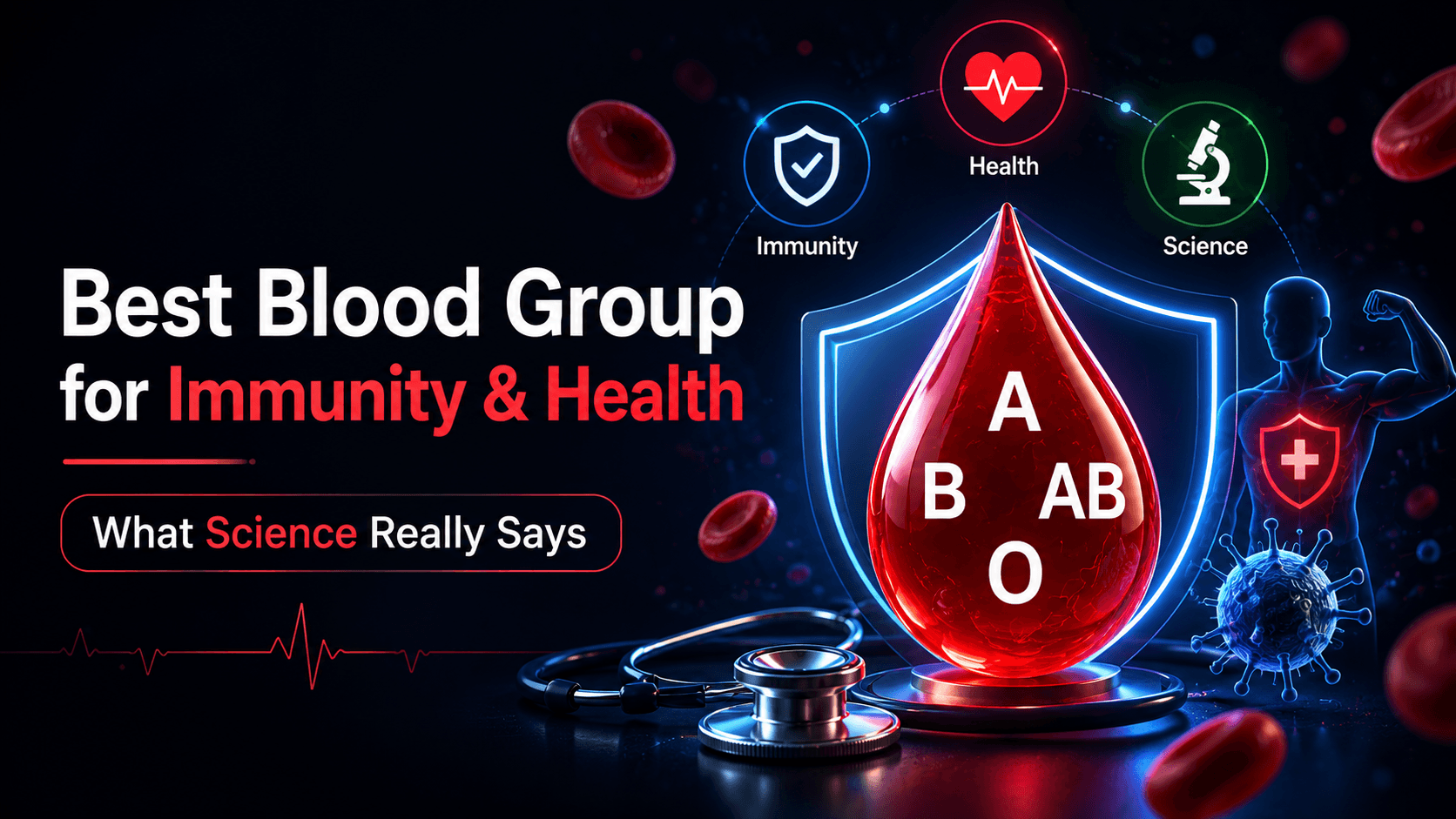
After COVID hit, a lot of people started asking questions they'd never thought about before. One of the most common ones? "Does my blood group affect how sick I get?"
It's a fair question. And honestly, the answer is more interesting than a simple yes or no.
Your blood type is something you're born with. You can't change it. But understanding what it means for your health, your immunity, and your disease risk can genuinely help you take better care of yourself.
So let's break it down no jargon, no fluff.
First, a Quick Recap: What Are Blood Groups?
Most people know the basics A, B, AB, and O. Each type is defined by antigens (proteins) on the surface of your red blood cells. The Rh factor (positive or negative) adds another layer.
So you end up with 8 common blood types: A+, A-, B+, B-, AB+, AB-, O+, O-.
Your immune system uses these antigens as "identity markers." If foreign antigens enter your body from a transfusion, infection, or even a transplant your immune system treats them as threats and attacks.
This is why blood group compatibility matters in medicine. But it also matters in everyday health, in ways researchers are still uncovering.
Is There Really a "Best" Blood Group for Immunity?
Here's the honest truth: no single blood group is universally "the best." Each type has its own set of advantages and vulnerabilities. What makes one blood type more resilient against one condition might make it more susceptible to another.
That said, research has found some clear patterns worth knowing about.
Blood Group O: The "Universal Donor" With a Resilience Edge
Blood group O is often called the most ancient blood type. And when it comes to certain infections, people with type O do seem to have a built-in advantage.
Studies have shown that people with blood type O have lower rates of severe illness from several major infections. During the COVID-19 pandemic, multiple studies found that type O individuals were less likely to test positive and, when they did, tended to experience milder symptoms compared to types A, B, and AB.
Why? One theory is that people with type O produce natural antibodies against A and B antigens. Since many viruses and bacteria borrow host-cell structures (including blood group antigens) to enter cells, type O individuals may have a broader set of antibodies acting as an early defense layer.
Type O also shows lower risk of certain blood clotting disorders a key factor given that COVID-19 complications were often linked to abnormal clotting.
However, type O has its own vulnerabilities. These individuals tend to have higher rates of peptic ulcers (often linked to H. pylori infection) and some studies suggest a higher susceptibility to cholera and plague bacteria.
So "immune advantage" is always relative. Type O wins in some arenas, loses in others.
Blood Group A: More Susceptible to Some Infections, But Not Defenseless
Type A has gotten some negative press since the pandemic. And there's a reason for it.
Multiple COVID-19 studies found that type A individuals were at higher risk of severe illness, hospitalization, and blood clotting complications. A landmark study in Nature Genetics (2020) confirmed a genetic signal near the ABO gene that raised risk for type A individuals.
Researchers believe type A antigens may make it easier for certain viruses including SARS-CoV-2 to bind to respiratory cells. Some bacteria also use A-like structures to evade detection.
On the flip side, type A individuals have been found to have slightly stronger responses to certain vaccines and may carry some protective advantage against malaria in some populations.
The takeaway? Type A people aren't at a blanket disadvantage but they may benefit more from proactive health habits and preventive care.
Blood Group B: The Middle Ground
Type B sits somewhere in between. Research hasn't flagged type B as especially high risk or especially protective across most major diseases.
Some studies have linked type B to slightly elevated risk of pancreatic cancer and ovarian cancer, but the relationship is modest and other factors (diet, genetics, lifestyle) play a much larger role.
In terms of immunity, type B individuals produce antibodies against A antigens but not B. This gives them partial cross-protection against some pathogens better than type AB, but not quite as broad as type O.
Blood Group AB: The "Universal Receiver" With the Most Complex Immune Profile
AB is the rarest major blood type. People with type AB don't produce antibodies against either A or B antigens, since they carry both.
This actually makes the AB immune system more "tolerant" which is a double-edged sword. On one hand, AB individuals are less likely to reject organs or react to certain foreign substances. On the other, this tolerance means the immune system may be slower to mount aggressive defenses against certain pathogens.
Studies have found that AB individuals have higher rates of cognitive decline and memory issues as they age, possibly due to elevated clotting factors and inflammation. They also tend to face higher risk of cardiovascular complications compared to type O.
That said, AB individuals do seem to have lower susceptibility to some parasitic diseases and appear to handle certain autoimmune environments better.
What About the Rh Factor? Does Positive or Negative Matter for Immunity?
This is often overlooked. The Rh factor (whether you're positive or negative) doesn't appear to have a major direct impact on general immunity or infection resistance in most research.
Where it matters most is in pregnancy (Rh incompatibility between mother and fetus) and blood transfusions. For day-to-day immune health, being Rh positive or negative seems to have minimal influence at least based on current evidence.
Blood Group and Disease Risk: A Summary Table
|
Blood Group |
Strengths |
Vulnerabilities |
|
O |
Lower COVID severity, less clotting risk, broader natural antibodies |
Higher ulcer risk, some bacterial infections |
|
A |
Better vaccine response in some cases |
Higher risk from COVID-19, some cancers |
|
B |
Moderate resilience |
Slightly elevated pancreatic/ovarian cancer risk |
|
AB |
Organ tolerance, lower parasitic disease risk |
Higher clotting, cardiovascular, cognitive risk |
For a deeper look at how blood groups connect to specific conditions, the Blood Group and Disease Risk: What Science Actually Says guide covers the research in detail.
How Immunity Is Really Built — Blood Group Is Just One Piece
Here's something important to put all of this in perspective.
Your blood group is a genetic factor it sets the backdrop. But immunity is built (and broken) by dozens of other variables:
-
Diet and nutrition — Micronutrient deficiencies (zinc, vitamin D, vitamin C) weaken immune response regardless of blood type
-
Sleep — Chronic poor sleep suppresses T-cell activity across all blood groups
-
Exercise — Moderate regular exercise strengthens immunity; intense overtraining suppresses it
-
Stress — Chronic stress elevates cortisol, which blunts immune function
-
Gut health — Over 70% of the immune system is in the gut lining; diet directly shapes this
So even if you're type O with a theoretical edge, a poor diet and no sleep can wipe out that advantage fast. And a type A individual who eats well, sleeps 7-8 hours, and exercises regularly will almost certainly be healthier than a sedentary type O who doesn't.
If you're interested in understanding your complete blood health profile — including what your blood type can and can't tell you about diet the Blood Groups Explained: Types, Compatibility, Diet, Health and Myths (2026 Guide) is worth reading.
What About the Blood Type Diet — Does It Actually Work?
You've probably heard of it. The idea that people with type O should eat more meat, type A should go vegetarian, type B should avoid chicken, and so on.
It's a popular concept. But the science doesn't back it up.
A large study published in PLOS ONE (2013) involving over 1,400 participants found that while the diets themselves had some health benefits, those benefits were independent of blood type. Type O individuals didn't benefit more from a high-protein diet than type A individuals. Everyone benefited roughly equally from healthier eating patterns.
So the blood type diet isn't "wrong" per se it's just not blood-type-specific. Eating more vegetables, less processed food, and adequate protein is good advice for everyone, regardless of whether you're A, B, AB, or O.
You can explore what the actual evidence says in this detailed article: Blood Group and Food Habits: The Scientific Truth.
Practical Takeaways Based on Your Blood Type
If you're Type O: Focus on iron-rich foods (you may be prone to iron deficiency), monitor for ulcer symptoms, and maintain a balanced diet rich in anti-inflammatory foods.
If you're Type A: Prioritize cardiovascular health, manage stress well (cortisol hits type A harder in some studies), and don't skip vaccinations your immune response to vaccines tends to be solid.
If you're Type B: Maintain a diverse diet, get regular screenings as you age, and stay physically active to offset any cancer risk elevation.
If you're Type AB: Watch your cardiovascular markers closely, stay mentally active to support cognitive health, and consider heart-health-focused dietary patterns like the Mediterranean diet.
FAQs
Q: Which blood group has the strongest immune system?
There's no single "strongest" blood type for immunity. Type O shows advantages against certain viral infections, but each blood type has both strengths and vulnerabilities depending on the disease or condition.
Q: Is blood group O the healthiest?
Type O has some notable advantages lower COVID severity, less clotting risk, broader natural antibodies. But it also has a higher susceptibility to peptic ulcers. Overall health depends far more on lifestyle than blood type.
Q: Which blood group is most resistant to COVID-19?
Multiple studies found type O individuals had lower infection rates and milder outcomes during COVID-19. Type A showed higher risk of severe illness. However, vaccination and healthy habits matter far more.
Q: Does blood group affect cancer risk?
Some research links type A to slightly higher risk of certain cancers (stomach, pancreatic). Type B also shows a modest association with pancreatic cancer. But these associations are small, and lifestyle factors are far more influential.
Q: Can I improve my immunity despite having a "vulnerable" blood type?
Absolutely. Diet, sleep, exercise, stress management, and vaccinations have a far greater impact on your immune strength than your blood type. Blood type is one background factor among many.
Q: Is the blood type diet scientifically proven?
No. Large studies have not found that eating according to your blood type provides specific benefits. General healthy eating benefits everyone equally.
Final Word
Your blood group gives researchers interesting clues about disease susceptibility and immune behavior. Type O does have some real advantages in certain viral and clotting-related conditions. Type A faces higher risk in others. But no blood type is a life sentence for poor health or a guarantee of good health.
The most powerful thing you can do whatever blood type you have is build strong daily habits. Eat well, sleep enough, stay active, manage stress, and don't skip your checkups. Your blood type sets the stage, but your lifestyle writes the story.
Disclaimer: This article is for informational purposes only and does not constitute medical advice. Always consult a qualified healthcare professional for personal health guidance
Suggested Articles
 Home Remedies
Best Home Remedies for Cold and Cough That Actually Work
Sneezing, sore throat, blocked nose? These tried-and-tested home remedies for cold and cough use ingredients already ...
Read Article arrow_forward Healthcare News
Blood Group Importance in Emergency Situations - Why It Can Literally Save Your Life
Your blood group can mean the difference between life and death in an emergency. Here's why knowing your blood type i...
Read Article arrow_forward Nutrition
High-Protein Vegetarian Foods in India: 20+ Protein-Rich Foods
Meeting your protein needs as a vegetarian in India is easier than you think. Here are the best high-protein foods av...
Read Article arrow_forward Diet Plans
7-Day Indian Vegetarian Diet Plan for Weight Loss Without Gym
A practical 7-day Indian vegetarian diet plan for weight loss without gym. Eat dal, roti, sabzi, and chaas the right ...
Read Article arrow_forward