

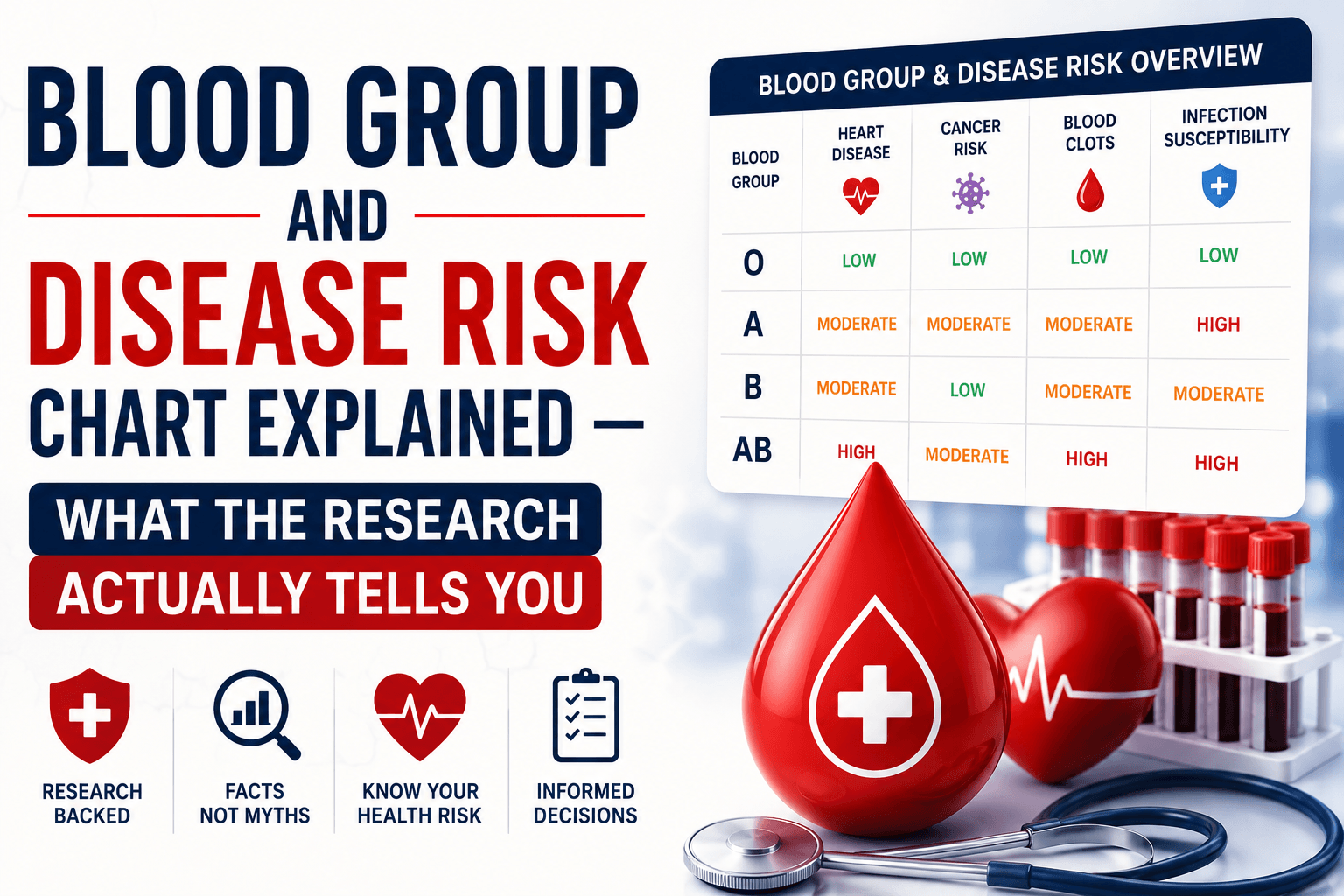
Blood Group and Disease Risk Chart Explained: What the Research Actually Tells You
Your blood group may be associated with your risk of developing certain diseases. Research has found links between ABO blood groups and conditions such as blood clots, cardiovascular disease, some cancers, and certain infections.
But there is an important distinction: having a particular blood type does not mean you will develop a particular disease. Most of these findings are population-level associations, and factors such as age, genetics, smoking, diet, physical activity, blood pressure, cholesterol, diabetes, and family history generally have a much greater influence on individual health.
So what does the research actually say about blood group and disease risk?
This guide explains the evidence behind blood type disease associations, which findings are relatively consistent, which remain uncertain, and what you can realistically do with this information.
Does Blood Type Affect Disease Risk?
Yes, research suggests that ABO blood group can influence susceptibility to some diseases.
Your blood group is determined by antigens found on the surface of red blood cells:
- Type A has A antigens.
- Type B has B antigens.
- Type AB has both A and B antigens.
- Type O has neither A nor B antigens.
These differences can affect biological processes beyond blood transfusion compatibility.
One of the best-studied mechanisms involves blood-clotting proteins. People with non-O blood groups (A, B, or AB) generally have higher levels of von Willebrand factor (vWF) and factor VIII than people with blood group O. These proteins play important roles in blood clotting.
This is one reason researchers have found higher rates of some clotting disorders and cardiovascular conditions among non-O blood groups.
Blood-group antigens can also interact with microorganisms and other biological pathways, which may help explain associations between particular blood types and certain infections or cancers.
However, association does not mean causation. Your blood group is only one small part of your overall health-risk profile.
Blood Group and Disease Risk Chart
The table below summarizes some of the better-known associations reported in research.
| Disease or condition | Blood-group association | What research suggests |
|---|---|---|
| Venous blood clots (DVT/PE) | Non-O groups, particularly AB | Non-O blood groups generally have higher observed risk |
| Coronary artery disease | Some non-O groups, particularly A | Modest association reported in large studies |
| Stroke | Some non-O groups | Associations have been reported, but individual risk varies |
| Stomach cancer | Type A | Higher association has been observed in multiple studies |
| Pancreatic cancer | Types A and B/non-O | Higher risk has been reported compared with type O |
| Peptic ulcer disease | Type O | Type O has been associated with higher risk |
| Severe malaria | Non-O groups | Type O may offer some protection against severe disease |
| Cholera | Type O | Severe disease may be more likely in people with type O |
| COVID-19 infection | Associations with A and O reported | Evidence is mixed and does not reliably predict severity |
| Cognitive impairment | Type AB | One major observational study reported an association; more research is needed |
Important: These are population-level associations. They do not predict whether an individual will develop a disease.
How Strong Is the Evidence?
Not every blood type-disease association has the same level of scientific support.
Some relationships have been observed repeatedly across large studies and have plausible biological mechanisms. Others are based on smaller studies, specific populations, or findings that have not been consistently reproduced.
Relatively well-established associations
The relationship between non-O blood groups and blood-clotting risk is among the more consistent findings. Research has repeatedly linked non-O blood groups with higher levels of clotting-related proteins and increased risk of venous thromboembolism.
Moderate evidence
Associations between ABO blood group and conditions such as coronary artery disease, pancreatic cancer, stomach cancer, and severe malaria have been reported in multiple studies.
More uncertain findings
Associations involving conditions such as COVID-19 outcomes and cognitive impairment require more cautious interpretation because results can vary between populations and studies.
The most important point is that blood type should be viewed as a background risk modifier, not a medical diagnosis or prediction.
Blood Type A and Disease Risk
Blood group A has been associated with several health conditions in epidemiological research.
Blood Type A and Heart Disease
Research has found a modestly higher risk of coronary artery disease in some non-O blood groups compared with type O, with type A among the groups showing an association.
One possible explanation is the difference in clotting-factor levels between blood groups.
However, having blood type A does not mean that you are destined to develop heart disease.
Traditional risk factors such as:
- High blood pressure
- High LDL cholesterol
- Smoking
- Diabetes
- Obesity
- Physical inactivity
- Family history
are far more important when assessing an individual's cardiovascular risk.
Blood Type A and Stomach Cancer
The association between blood group A and gastric cancer is one of the more frequently reported blood-type cancer relationships.
Researchers have proposed several possible explanations, including interactions between ABO antigens, inflammation, and Helicobacter pylori (H. pylori), a bacterium associated with stomach ulcers and stomach cancer.
This does not mean people with type A need special cancer screening solely because of their blood type.
If you have symptoms, a strong family history, or other recognized risk factors, discuss appropriate screening with a healthcare professional.
Blood Type A and COVID-19
During the COVID-19 pandemic, numerous studies investigated whether ABO blood group affected susceptibility to SARS-CoV-2 infection.
Some studies reported that people with type A were more likely to become infected and that type O might have a lower infection risk. However, findings have not been completely consistent across populations.
Therefore:
Blood type cannot be used to predict whether someone will develop severe COVID-19.
Vaccination status, age, underlying conditions and other factors are much more important when evaluating COVID-19 risk.
Blood Type B and Disease Risk
Blood group B has also been studied in relation to cardiovascular disease, cancer and infections.
Compared with some of the stronger associations involving non-O blood groups and clotting disorders, many of the findings involving type B are more modest or inconsistent.
Blood Type B and Pancreatic Cancer
Several large observational studies have reported an association between non-O blood groups, including type B, and pancreatic cancer compared with blood group O.
The reason for this association is still being investigated.
It is important not to interpret this as meaning that people with type B are likely to develop pancreatic cancer. Pancreatic cancer risk depends on many factors, including age, smoking, obesity, diabetes, family history and certain inherited genetic conditions.
Blood Type B and Other Conditions
Researchers have investigated blood group B in relation to:
- Cardiovascular disease
- Blood-clotting disorders
- Certain cancers
- Infectious diseases
The strength of these associations varies.
There is currently no medical recommendation that people with blood type B follow a special diet or screening program simply because of their blood group.
Blood Type AB and Disease Risk
Blood group AB is less common than A, B or O and has attracted considerable attention in blood-group research.
Because AB blood contains both A and B antigens, and because non-O blood groups tend to have higher levels of certain clotting proteins, researchers have studied AB blood in relation to clotting and cardiovascular conditions.
Blood Type AB and Blood Clots
Non-O blood groups generally have higher levels of von Willebrand factor and factor VIII than blood group O.
Among the ABO groups, AB is often associated with particularly high levels of these proteins.
This may partly explain why studies have found an increased risk of venous thromboembolism and some cardiovascular conditions among people with AB blood compared with type O.
However, blood type alone is not enough to determine an individual's likelihood of developing a blood clot.
Other factors include:
- Recent surgery
- Prolonged immobility
- Pregnancy
- Certain medications
- Cancer
- Obesity
- Previous blood clots
- Genetic clotting disorders
Blood Type AB and Cognitive Impairment
A widely cited observational study involving older adults found an association between blood group AB and cognitive impairment compared with other blood groups.
The study reported a substantially higher likelihood of cognitive impairment among participants with AB blood.
However, this finding needs to be interpreted carefully.
It was an observational association, not proof that AB blood causes dementia or memory loss. One study cannot establish that having AB blood directly causes cognitive decline.
More research is needed to understand whether the association is consistent across different populations and what biological mechanisms might explain it.
What this means for people with AB blood
It does not mean that someone with AB blood will develop dementia.
Maintaining cardiovascular health, staying physically active, managing blood pressure and diabetes, avoiding tobacco, getting adequate sleep and remaining socially and mentally engaged are important for brain health regardless of blood type.
Blood Type O and Disease Risk
Blood group O is associated with lower risk of several clotting and cardiovascular conditions compared with non-O blood groups.
But type O is not universally "healthier."
It has also been associated with increased susceptibility to some gastrointestinal infections and diseases.
Blood Type O and Cardiovascular Risk
People with blood group O generally have lower levels of von Willebrand factor and factor VIII than people with non-O blood groups.
This is one reason type O has been associated with a lower risk of some blood-clotting conditions.
Research has also found lower rates of certain cardiovascular events among people with type O compared with non-O groups.
However, this does not eliminate cardiovascular risk.
A person with type O who smokes, has uncontrolled blood pressure, high cholesterol or diabetes can still develop heart disease.
Blood Type O and Peptic Ulcers
Blood group O has been associated with an increased risk of peptic ulcer disease.
One possible explanation involves interactions between ABO blood-group characteristics and H. pylori, a major cause of peptic ulcers.
If you experience persistent symptoms such as:
- Burning or recurring upper-abdominal pain
- Unexplained nausea
- Vomiting
- Black stools
- Unexplained weight loss
seek medical evaluation rather than assuming the symptoms are related to your blood type.
Blood Type O and Cholera
Research has found an association between blood group O and more severe cholera.
Cholera is caused by Vibrio cholerae, and the interaction between blood-group characteristics and the infection may influence disease severity.
This is a good example of why no blood type can be considered universally "best."
A blood group that appears protective against one condition may be associated with greater vulnerability to another.
Blood Type O and Severe Malaria
Blood group O has also been associated with some protection against severe Plasmodium falciparum malaria.
One proposed mechanism involves the way infected red blood cells interact with uninfected cells during malaria infection.
This association is particularly relevant to populations living in malaria-endemic regions, but it does not mean that people with type O are protected from malaria.
Preventive measures against mosquito bites and appropriate medical care remain essential.
Blood Group and COVID-19: What Research Shows
COVID-19 generated a large amount of research into possible relationships between blood type and infection.
Some studies reported:
- Higher infection rates among people with type A
- Lower infection rates among people with type O
- Associations between ABO blood group and certain COVID-19 outcomes
However, results have varied between studies and populations.
The evidence is therefore not strong enough to use blood type as a reliable predictor of COVID-19 severity.
Your age, vaccination status, underlying medical conditions and other established risk factors are much more important when assessing your individual risk.
Blood Group and Cancer Risk
ABO blood group has been associated with several types of cancer in epidemiological research.
The most frequently discussed relationships include:
Stomach cancer
Blood group A has been associated with higher rates of gastric cancer compared with type O in multiple studies.
Pancreatic cancer
Non-O blood groups, including A and B, have been associated with increased pancreatic cancer risk compared with type O in observational research.
Other cancers
Researchers have also investigated associations between ABO blood group and other cancers, but evidence varies considerably by cancer type.
The important takeaway
Blood type does not cause cancer.
And knowing your blood group does not tell you whether you will develop cancer.
Established cancer risk factors such as smoking, alcohol use, obesity, infections, environmental exposures, genetics and family history generally have much greater clinical importance.
Follow recommended cancer-screening guidelines based on your age, sex, family history and individual risk—not simply your blood type.
Blood Group and Heart Disease: What You Should Know
One of the most clinically interesting areas of blood-group research is cardiovascular disease.
Non-O blood groups have higher levels of certain clotting proteins than type O. Large observational studies and meta-analyses have found associations between non-O blood groups and cardiovascular or thrombotic conditions.
However, this should not change the basic approach to heart-health prevention.
Regardless of your blood group:
- Don't smoke.
- Stay physically active.
- Maintain a healthy weight.
- Eat a balanced diet.
- Monitor blood pressure.
- Monitor cholesterol when recommended.
- Manage diabetes if you have it.
- Follow your healthcare provider's advice.
These measures have a much greater practical impact on cardiovascular health than blood type alone.
For more information, see our guide to which blood group is most prone to heart disease.
What Your Blood Type Cannot Tell You
Blood group research can be interesting, but it has important limits.
Your blood type cannot tell you:
- Whether you will definitely develop heart disease.
- Whether you will develop cancer.
- Whether you will develop dementia.
- How long you will live.
- Whether you are naturally "healthy" or "unhealthy."
- Which diet you personally need.
- Whether you will develop COVID-19.
- Whether you need medical treatment.
It also cannot replace standard medical testing.
For example, knowing that you are blood group O does not mean you can ignore blood pressure or cholesterol testing.
Likewise, knowing that you are blood group A does not mean you have heart disease.
Blood type is one biological characteristic—not a complete health profile.
What You Can Actually Do With This Information
The most useful way to think about blood-group research is as background information rather than a personal prediction.
For everyone, regardless of blood group:
1. Know your cardiovascular risk
Monitor blood pressure, cholesterol, blood sugar and other factors according to your healthcare provider's recommendations.
2. Don't smoke
Tobacco is a major modifiable risk factor for cardiovascular disease, cancer and many other conditions.
3. Stay physically active
Regular physical activity supports cardiovascular, metabolic and mental health.
4. Maintain a balanced diet
Focus on vegetables, fruits, whole grains, legumes, nuts, adequate protein and minimally processed foods.
5. Follow appropriate screening recommendations
Cancer screening and other preventive tests should be based on your age, sex, symptoms, family history and recognized risk factors.
6. Know your family history
Family history can be much more informative for many diseases than blood group alone.
7. Don't self-diagnose based on blood type
If you have symptoms, seek appropriate medical evaluation instead of attributing them to your blood group.
Quick Reference: Blood Group and Disease Risk
| Blood group | Some associations reported in research | Important context |
|---|---|---|
| A | Coronary artery disease, stomach cancer, some COVID-19 associations | Associations are modest and do not predict individual outcomes |
| B | Pancreatic cancer and some other conditions | Evidence varies by disease |
| AB | Blood clots, some cardiovascular conditions, cognitive impairment | Several findings need cautious interpretation |
| O | Lower risk of some clotting/cardiovascular conditions; higher association with peptic ulcers and severe cholera | O is not universally the "healthiest" blood type |
FAQs About Blood Group and Disease Risk
Which blood group has the highest risk of heart disease?
Research suggests that some non-O blood groups, particularly A and AB, may have higher cardiovascular risk than blood group O. However, the difference is generally modest, and conventional cardiovascular risk factors are much more important for an individual.
Which blood group has the lowest risk of blood clots?
Blood group O is generally associated with a lower risk of venous blood clots than non-O blood groups. This is thought to be partly related to lower levels of von Willebrand factor and factor VIII.
Is blood group O healthier than other blood groups?
Not necessarily. Blood group O is associated with lower risk of some cardiovascular and clotting conditions, but it is also associated with higher risk of certain conditions, including peptic ulcer disease and severe cholera. No blood group is universally healthiest.
Does blood type affect cancer risk?
Research has identified associations between ABO blood groups and certain cancers, particularly stomach and pancreatic cancer. These are population-level associations and do not mean that a specific blood type causes cancer.
Does blood type affect COVID-19 risk?
Some studies have found associations between ABO blood group and COVID-19 infection, including possible differences between A and O blood groups. However, the evidence is mixed, and blood type is not a reliable way to predict whether someone will develop severe COVID-19.
Does AB blood group increase dementia risk?
One observational study reported a higher likelihood of cognitive impairment among people with AB blood compared with other blood groups. This does not prove that AB blood causes dementia, and the finding should be interpreted cautiously.
Can blood group predict your overall health?
No. Blood group may modify the statistical risk of certain conditions, but it cannot predict an individual's overall health. Age, genetics, lifestyle, medical history and environmental factors all play important roles.
Where can I get my blood group tested in India?
Blood group testing is available at diagnostic laboratories, hospitals and many blood banks. A basic ABO and Rh blood-group test uses a small blood sample. If you need your blood type for a medical procedure, follow the testing requirements of your healthcare provider or hospital.
Related Blood Group Guides
If you're interested in understanding your blood type further, explore these related Sehat Raaz guides:
- Which Blood Group Is Most Prone to Heart Disease?
- Which Blood Group Lives Longer? Here's What Research Says
- Blood Groups: Types, Compatibility, Diet, Health and Myths
- How to Check Your Blood Group at Home
- Rarest Blood Group in India: Bombay Blood Group
The Bottom Line
Your blood group and disease risk are connected in ways that researchers are still working to understand.
The strongest evidence involves the relationship between ABO blood group, clotting factors and thrombotic disease. Research has also identified associations between blood group and conditions such as coronary artery disease, stomach cancer, pancreatic cancer, peptic ulcers and certain infections.
But these associations should not be interpreted as predictions.
Your blood type does not determine your health, and no blood group is universally "best."
Think of blood type as one small piece of the health puzzle. Your lifestyle, medical history, genetics and established risk factors are far more important when it comes to preventing disease.
Know your blood group, understand what the research actually says, and focus your health efforts on the factors you can control.
Medical Disclaimer: This article is intended for general informational and educational purposes only. Blood-group research describes associations observed at the population level and should not be used to diagnose or predict an individual's risk of disease. It does not replace medical advice, diagnosis, screening or treatment from a qualified healthcare professional. If you have symptoms or concerns about your health, consult an appropriate healthcare provider.
Suggested Articles
 Ayurvedic Tips
 Mental Health
Why Overthinking Happens at Night and How to Calm Your Mind
Lying awake with your mind racing? Here's why overthinking at night happens, what's going on in your brain after dark...
Read Article arrow_forward Fitness
Opinion | Fitness Influencers Are Not Making Men More Fit
Fitness influencers promise better bodies and faster results, but are they actually making men fitter? Explore the im...
Read Article arrow_forward
Ayurvedic Tips
Do this for three months and transform your fitness for years
Read Article arrow_forward