
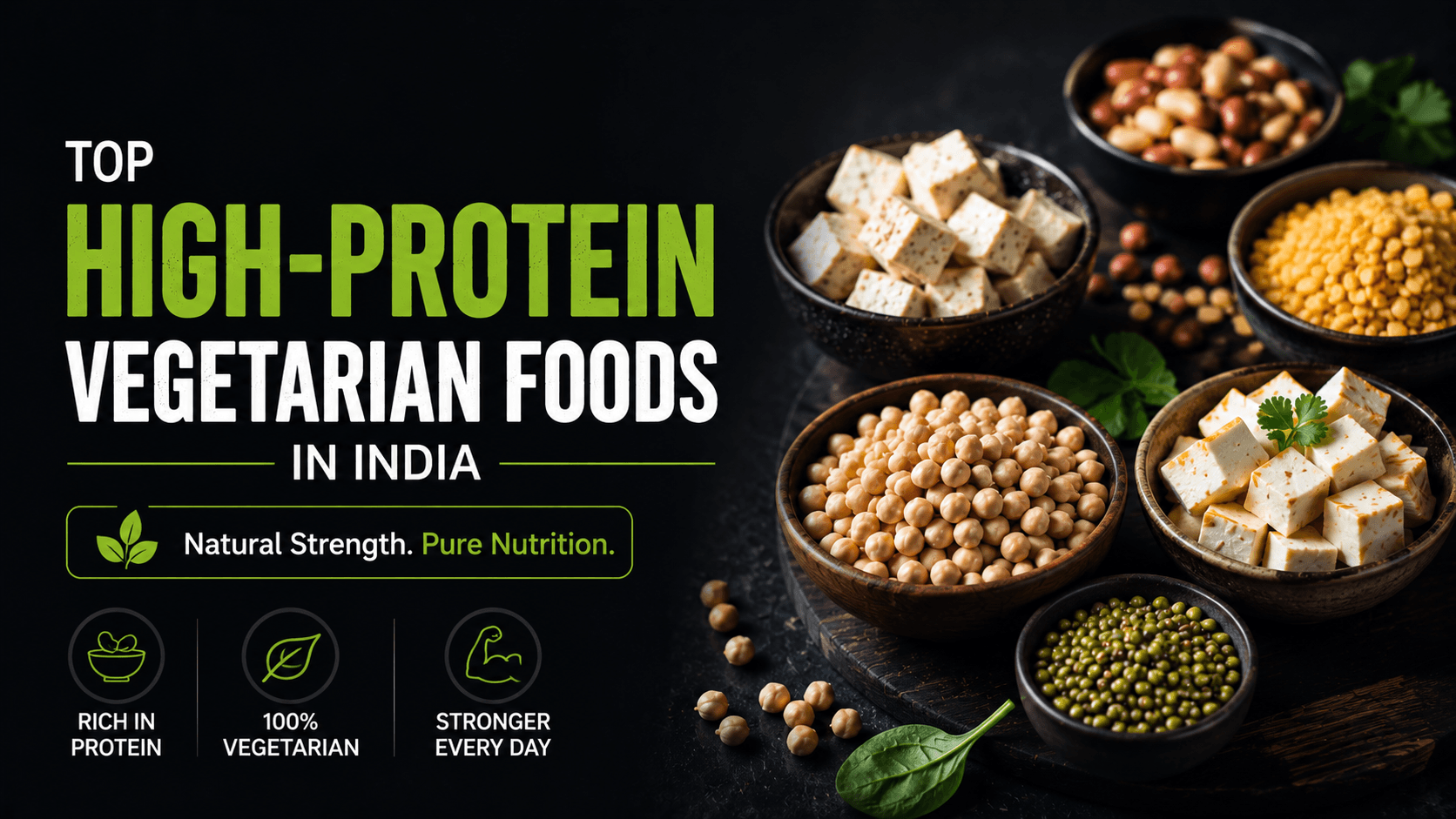
High-Protein Vegetarian Foods in India: 20+ Protein-Rich Foods
Looking for high-protein vegetarian foods in India without relying on protein powder or supplements? You have plenty of options.
Dal, chana, rajma, soy foods, paneer, curd, milk, peanuts, nuts, seeds and other everyday Indian foods can all contribute meaningful amounts of protein to a balanced vegetarian diet.
The key is not finding one “perfect” protein food. It is building meals around a variety of protein-rich Indian foods and eating enough total food to meet your individual needs.
In this guide, you'll find some of the best high-protein vegetarian foods available in India, their approximate protein content, easy ways to include them in your diet, and simple high-protein vegetarian meal ideas.
Quick answer: Some of the most useful high-protein vegetarian foods in India include soya chunks, soybeans, paneer, dal, chickpeas (chana), rajma, curd or Greek yogurt, peanuts, nuts and seeds. The exact protein content varies by food, brand, preparation and serving size.
How Much Protein Do You Need?
Protein requirements vary depending on factors such as age, body size, activity level, pregnancy or breastfeeding, and health status.
There is no single protein target that applies to everyone.
For healthy adults, protein needs can be estimated using body weight and individual circumstances. People who regularly perform resistance training or have specific nutrition goals may have different requirements from sedentary adults.
If you exercise regularly, are trying to gain muscle, are losing weight, are pregnant, are older, or have a medical condition, your protein needs may require individual assessment by a qualified dietitian or healthcare professional.
The ICMR-NIN Dietary Guidelines for Indians emphasize pulses, legumes, soybeans, nuts and seeds as important sources of protein in Indian diets. They also note that combining cereals and pulses can improve the overall protein quality of a vegetarian or vegan diet.
A simple way to think about protein
Instead of trying to get all your protein at dinner, include a protein-rich food at:
-
Breakfast
-
Lunch
-
Evening snack
-
Dinner
A varied diet can provide the amino acids your body needs over the course of the day.
20+ High-Protein Vegetarian Foods in India
1. Soya Chunks
Soya chunks, also known as textured soy protein or nutri-nuggets, are one of the most concentrated and affordable vegetarian protein foods commonly available in India.
Depending on the product, dry soya chunks can provide roughly 50 g of protein per 100 g dry weight, although nutrition values vary by brand.
How to eat soya chunks
Try them in:
-
Soya curry
-
Soya pulao
-
Soya keema
-
Soya-stuffed paratha
-
Mixed vegetable sabzi
-
Soya tikka
Because dry soya chunks absorb water during cooking, don't compare their protein value directly with the protein content of cooked foods by weight.
2. Paneer
Paneer is one of the easiest ways for lacto-vegetarians to add protein to an Indian meal.
Depending on the type and brand, 100 g of paneer can provide around 18–20 g of protein.
Paneer also provides calcium and other nutrients, but full-fat paneer can be relatively high in calories and saturated fat.
Healthier ways to eat paneer
Try:
-
Paneer bhurji
-
Grilled paneer
-
Paneer tikka
-
Paneer and vegetable salad
-
Paneer curry with vegetables
-
Paneer stuffed roti
If you're watching calorie or saturated-fat intake, compare nutrition labels and consider lower-fat varieties where appropriate.
3. Moong Dal
Moong dal is one of the most practical protein-rich Indian foods because it is affordable, widely available and easy to prepare.
Cooked moong dal contains roughly 7–8 g of protein per 100 g, although the exact amount varies with preparation and water content.
Ways to eat moong dal
-
Moong dal
-
Moong dal khichdi
-
Moong dal chilla
-
Sprouted moong salad
-
Moong dal dosa
-
Moong soup
Moong sprouts can also be used in salads, chaat and breakfast bowls.
4. Chickpeas (Chana)
Chickpeas are another excellent vegetarian protein source.
Both kabuli chana and kala chana can be part of a high-protein vegetarian diet.
Cooked chickpeas provide roughly 8–9 g of protein per 100 g.
They also provide dietary fibre, making them a filling addition to meals.
Easy ways to eat chana
-
Chole
-
Kala chana curry
-
Chana salad
-
Chana chaat
-
Hummus
-
Roasted chickpeas
-
Besan-based dishes
5. Besan
Besan, or gram flour, is made from chickpeas and is particularly useful for Indian breakfasts and snacks.
A besan chilla can be made with:
-
Besan
-
Onion
-
Tomato
-
Green chilli
-
Coriander
-
Spices
-
Vegetables
Pairing besan chilla with curd can make the meal even more protein-rich.
6. Rajma
Rajma is a popular North Indian food and a useful source of both protein and fibre.
Cooked kidney beans contain roughly 8–9 g of protein per 100 g, depending on preparation.
Try rajma in:
-
Rajma curry
-
Rajma chawal
-
Rajma salad
-
Rajma wraps
-
Rajma bowls
Rajma and rice also provide complementary amino acid patterns, making the combination a useful part of a varied vegetarian diet. ICMR-NIN specifically notes the nutritional value of combining cereals and pulses in vegetarian diets.
7. Masoor Dal
Masoor dal is another everyday Indian protein source.
Cooked masoor dal provides approximately 8–9 g of protein per 100 g, depending on preparation.
You can use it in:
-
Masoor dal
-
Dal soup
-
Khichdi
-
Dal with rice
-
Dal with roti
-
Mixed dal recipes
8. Toor Dal
Toor dal, also called arhar dal, is a staple in many Indian households.
It provides protein along with carbohydrates, fibre and several micronutrients.
A bowl of toor dal with vegetables and a whole-grain cereal can form part of a balanced vegetarian meal.
9. Black Gram (Urad Dal)
Urad dal is another protein-containing pulse commonly used in Indian cooking.
It is found in dishes such as:
-
Dal makhani
-
Idli
-
Dosa
-
Vada
-
Mixed dal preparations
For a balanced meal, combine pulse-based foods with vegetables and appropriate portions of grains or other whole-food carbohydrate sources.
10. Soybeans
Whole soybeans are a nutrient-dense plant protein source.
Soy foods are particularly useful for vegetarians and vegans because soy provides all nine essential amino acids.
Soybeans can be used in:
-
Soybean curry
-
Soybean salad
-
Soy milk
-
Tofu
-
Soy-based snacks
Soy is also one of the plant proteins highlighted in discussions of healthy plant-based protein choices.
11. Tofu
Tofu is made from soybeans and can be an excellent alternative to paneer for people following a vegan diet or anyone who wants more plant-based protein.
Protein content varies considerably by type and brand, so check the nutrition label.
Use tofu in:
-
Stir-fries
-
Tofu bhurji
-
Curries
-
Salads
-
Wraps
-
Tofu tikka
12. Curd and Greek Yogurt
Curd is an everyday Indian food that can contribute protein to meals.
Regular curd generally contains around 3–4 g of protein per 100 g, although values vary.
Greek yogurt or strained curd is more concentrated and can provide substantially more protein per 100 g.
Easy ideas
-
Curd with lunch
-
Greek yogurt with fruit
-
Hung-curd dip
-
Raita
-
Yogurt with roasted seeds
-
Curd-based smoothie
Choose unsweetened options when possible if you're trying to limit added sugar.
13. Milk
Milk provides protein as well as calcium and other nutrients.
A typical glass of milk can contribute around 7–8 g of protein, depending on serving size and milk type.
You can include milk in:
-
Breakfast
-
Oats
-
Smoothies
-
Tea or coffee
-
Homemade shakes
People with lactose intolerance can consider lactose-free dairy or suitable fortified alternatives depending on their dietary needs.
14. Peanuts
Peanuts are among the most affordable protein-containing foods available in India.
They provide roughly 25–26 g of protein per 100 g, but they are also calorie-dense because they contain a substantial amount of fat.
Try peanuts as:
-
Roasted peanuts
-
Peanut chutney
-
Peanut poha
-
Peanut salad
-
Homemade peanut butter
-
Peanut-based chaat
Because peanuts are energy-dense, portion size matters if you're trying to lose weight.
15. Peanut Butter
Peanut butter can be a convenient way to add protein to breakfast or snacks.
A typical peanut butter provides roughly 20–25 g protein per 100 g, although the exact amount varies by brand.
Look for products with:
-
Peanuts as the main ingredient
-
Little or no added sugar
-
No unnecessary additives
Remember that peanut butter is still calorie-dense, so a moderate serving is usually enough.
16. Pumpkin Seeds
Pumpkin seeds provide protein, healthy fats and minerals.
They can be added to:
-
Salads
-
Curd
-
Oats
-
Smoothies
-
Homemade trail mix
-
Roasted snack mixes
A small handful can add protein without requiring major changes to your meals.
17. Hemp Seeds
Hemp seeds are a relatively concentrated plant protein source and contain all nine essential amino acids.
They can be sprinkled over:
-
Curd
-
Oats
-
Salads
-
Smoothie bowls
-
Dal
-
Homemade energy mixes
They can be more expensive than traditional Indian protein foods, so they are optional rather than essential.
18. Chia Seeds
Chia seeds contain some protein as well as fibre and healthy fats.
They are not as protein-dense as soya chunks or paneer, so think of them as a supporting food, not your primary protein source.
Add them to:
-
Curd
-
Oats
-
Smoothies
-
Chia pudding
-
Fruit bowls
19. Almonds and Other Nuts
Almonds, pistachios, peanuts, cashews and other nuts contribute protein along with healthy fats and other nutrients.
They are useful as snacks, but because nuts are calorie-dense, they should generally be eaten in sensible portions.
Try:
-
Almonds with fruit
-
Mixed nuts
-
Nuts in oats
-
Nut chutneys
-
Nuts with curd
20. Quinoa
Quinoa is technically a seed rather than a traditional grain.
Cooked quinoa provides roughly 4 g of protein per 100 g, although the exact amount depends on preparation.
It is useful as a rice or grain alternative in:
-
Quinoa pulao
-
Salads
-
Breakfast bowls
-
Khichdi-style dishes
Quinoa is nutritionally useful, but it is not necessary to buy expensive imported foods to get enough protein on a vegetarian Indian diet.
Traditional pulses, legumes, soy foods, dairy, nuts and seeds can already provide substantial protein.
High-Protein Vegetarian Foods Chart
Protein values can vary depending on the variety, brand, cooking method and water content. Always check the nutrition label for packaged foods.
| Food | Approximate protein | Serving/reference |
|---|---|---|
| Soya chunks | ~50 g | 100 g dry |
| Paneer | ~18–20 g | 100 g |
| Peanuts | ~25–26 g | 100 g |
| Cooked chickpeas | ~8–9 g | 100 g |
| Cooked rajma | ~8–9 g | 100 g |
| Cooked moong dal | ~7–8 g | 100 g |
| Cooked masoor dal | ~8–9 g | 100 g |
| Regular curd | ~3–4 g | 100 g |
| Milk | ~3–3.5 g | 100 ml |
| Quinoa | ~4 g | 100 g cooked |
| Tofu | Varies | Check package |
| Greek yogurt | Varies | Check package |
| Peanut butter | ~20–25 g | 100 g |
| Pumpkin seeds | ~25–30 g | 100 g |
| Hemp seeds | ~30 g | 100 g |
These are approximate values, not laboratory measurements for every product. Cooking changes water content, so protein values per 100 g can look very different between dry and cooked foods.
What Are the Best High-Protein Vegetarian Foods for Muscle Building?
If your goal is muscle gain, don't focus on one food.
Build meals around protein-rich foods such as:
-
Soya chunks
-
Tofu
-
Paneer
-
Curd or Greek yogurt
-
Milk
-
Dal
-
Chana
-
Rajma
-
Soybeans
-
Peanuts
Protein is only one part of muscle development. Resistance training, adequate energy intake, recovery and overall diet quality also matter.
ICMR-NIN's Dietary Guidelines for Indians specifically note that protein alone does not build muscle without adequate energy and physical activity.
Can Vegetarians Get Enough Protein Without Supplements?
Yes, many people can meet their protein needs through a well-planned vegetarian diet without protein powder.
Indian diets already contain many protein-rich foods, including:
-
Dal
-
Chana
-
Rajma
-
Soy
-
Paneer
-
Curd
-
Milk
-
Nuts
-
Seeds
-
Whole grains
For vegans, pulses, beans, soy foods, grains, nuts and seeds can provide a wide range of protein sources.
ICMR-NIN notes that vegans following varied diets containing vegetables, beans, grains, nuts and seeds can obtain adequate protein, and that combining cereals and pulses can improve the essential amino acid profile of a vegetarian diet.
Do Vegetarians Need to Combine Proteins at Every Meal?
Not necessarily.
You don't need to calculate complementary proteins at every single meal.
Eating a varied diet across the day can provide the amino acids your body needs.
Traditional combinations such as:
-
Dal + rice
-
Dal + roti
-
Rajma + rice
-
Chole + roti
are still useful because pulses and cereals complement each other's amino acid patterns.
The important point is dietary variety rather than obsessing over a perfect protein combination at every meal.
High-Protein Vegetarian Breakfast Ideas
If you're looking for a high-protein vegetarian breakfast in India, try:
Option 1
2 besan chillas + curd
Option 2
Moong dal chilla + paneer filling
Option 3
Vegetable poha + peanuts + curd
Option 4
Greek yogurt/strained curd + nuts + seeds
Option 5
Tofu or paneer bhurji + roti
Option 6
Sprouted moong chaat + curd
The exact protein content depends on portion size and ingredients.
High-Protein Vegetarian Lunch Ideas
Rajma + rice + salad
A classic combination of legumes and grains.
Dal + roti + curd + vegetables
An easy everyday Indian meal.
Chole + roti + salad
Chickpeas provide both protein and fibre.
Paneer + vegetables + roti
Useful for people who include dairy.
Soya chunks curry + rice or roti
A particularly protein-dense vegetarian option.
High-Protein Vegetarian Dinner Ideas
Try:
-
Soya chunks sabzi + roti + curd
-
Paneer and vegetable curry + roti
-
Dal + vegetables + rice
-
Rajma + salad + curd
-
Tofu stir-fry + roti
-
Chana salad + paneer or curd
A balanced dinner doesn't need to be extremely high in protein. Your total daily intake matters more than one meal.
Sample High-Protein Vegetarian Day
Here's an example of how you could distribute protein-rich foods throughout the day.
Breakfast
Moong dal chilla + curd
Mid-morning
Fruit + a small serving of peanuts
Lunch
Rajma + rice + vegetables + curd
Evening
Roasted chana or sprouts
Dinner
Soya chunks or paneer + roti + vegetables
This is only an example.
Your actual portion sizes should depend on your body size, activity level, dietary preferences and health goals.
High-Protein Vegetarian Foods for Weight Loss
If you're trying to lose weight, protein can be useful because protein-rich foods can contribute to fullness and help you maintain muscle while losing weight.
However, a high-protein diet does not automatically cause weight loss.
Pay attention to total calorie intake and food quality.
Good options include:
-
Dal
-
Chana
-
Rajma
-
Soya chunks
-
Tofu
-
Low-fat paneer
-
Unsweetened curd
-
Greek yogurt
-
Sprouts
-
Vegetables
-
Moderate portions of nuts and seeds
Be particularly mindful of calorie-dense foods such as:
-
Peanut butter
-
Peanuts
-
Nuts
-
Seeds
-
Full-fat paneer
These foods can be nutritious but are easy to overeat.
Are Soya Foods Safe to Eat?
Soy foods such as tofu, soybeans and soya chunks can be part of a healthy diet for most people.
Concerns about soy and hormones often come from confusion between phytoestrogens/isoflavones in soy and human estrogen.
Current evidence does not support the idea that normal soy food consumption automatically causes hormonal disruption in healthy adults.
If you have a soy allergy or a specific medical condition, speak with your healthcare professional about whether soy is appropriate for you.
Do You Need Protein Powder on a Vegetarian Diet?
Not necessarily.
Protein powder can be convenient in certain situations, but it is not a requirement for everyone.
Before buying a supplement, first look at your regular meals.
Can you increase:
-
Dal?
-
Chana?
-
Rajma?
-
Soya?
-
Paneer?
-
Curd?
-
Milk?
-
Tofu?
-
Nuts and seeds?
If your normal diet already provides enough protein for your needs, a supplement may not be necessary.
People with unusually high protein requirements, difficulty meeting nutritional needs through food, or specific medical or sports-nutrition goals may benefit from individualized advice from a registered dietitian or qualified healthcare professional.
What Is the Cheapest High-Protein Vegetarian Food in India?
There isn't one single winner because food prices vary by city, brand and season.
However, soya chunks, peanuts, dal, chana and other pulses are among the most economical protein-containing foods commonly available in India.
Traditional Indian foods can therefore provide a practical alternative to relying heavily on expensive supplements or specialty products.
Common Mistakes When Trying to Eat More Protein
1. Focusing on one “superfood”
You don't need to eat soya or paneer every day.
Variety is better.
2. Forgetting portion size
Protein content depends on how much you actually eat.
3. Comparing dry and cooked foods
100 g of dry soya chunks and 100 g of cooked soya chunks are not nutritionally equivalent because cooking changes water content.
4. Eating too many calorie-dense protein foods
Peanuts, nuts, seeds and full-fat paneer can be nutritious but calorie-dense.
5. Ignoring the rest of the diet
Protein is important, but your diet also needs vegetables, fruits, whole grains, healthy fats and adequate energy.
6. Assuming supplements are mandatory
A well-planned vegetarian diet can provide substantial protein from ordinary foods.
Frequently Asked Questions
Which is the highest-protein vegetarian food in India?
Soya chunks are among the most protein-dense vegetarian foods commonly available in India, with some products providing around 50 g protein per 100 g dry weight. The exact amount varies by product, so check the nutrition label.
What are the best vegetarian protein sources in India?
Some of the best options include soya chunks, soybeans, paneer, dal, chana, rajma, curd, milk, tofu, peanuts, nuts and seeds.
Can I get enough protein without protein powder?
Yes. A well-planned vegetarian diet can provide adequate protein for many people through pulses, legumes, soy foods, dairy, nuts, seeds and grains.
How much protein does dal have?
Protein varies by type and preparation. Many cooked dals provide approximately 7–9 g of protein per 100 g, although the exact value depends on the dal and how much water is used during cooking.
Is paneer high in protein?
Yes. Paneer typically provides around 18–20 g of protein per 100 g, depending on the product and preparation.
Is soya better than paneer for protein?
Both can be useful.
Soya products can provide a high amount of protein with relatively little food volume, while paneer provides protein along with dairy nutrients such as calcium.
Your choice can depend on whether you eat dairy, your calorie needs, food preferences and overall diet.
What is the cheapest vegetarian protein food in India?
Soya chunks, peanuts, dal and other pulses are among the most economical protein-rich foods in India, although prices vary by location and brand.
Are peanuts a good source of protein?
Yes. Peanuts provide approximately 25–26 g of protein per 100 g, but they are also high in calories and fat, so portion size matters.
Can vegetarians build muscle without protein supplements?
Yes. Muscle growth depends on adequate protein, sufficient energy, resistance training and recovery. A well-planned vegetarian diet can provide the protein needed for muscle development.
What should I eat for a high-protein vegetarian breakfast?
Good options include moong dal chilla with curd, besan chilla with curd, paneer or tofu bhurji, sprouts with curd, or Greek yogurt with nuts and seeds.
Is a high-protein diet good for weight loss?
Protein-rich foods can help with fullness and maintaining muscle during weight loss, but weight loss still depends on overall energy balance and diet quality.
Do I need to eat complete proteins at every meal?
No. A varied diet throughout the day can provide the essential amino acids your body needs. Traditional combinations such as dal and rice or dal and roti can also improve the overall protein quality of a vegetarian diet.
The Bottom Line
You do not need an expensive diet to eat more protein as a vegetarian in India.
Some of the most useful high-protein vegetarian foods in India are already common household ingredients:
Soya chunks, paneer, dal, chana, rajma, curd, tofu, peanuts, nuts and seeds.
The best approach is to:
-
Include a protein-rich food at each main meal
-
Eat a variety of pulses, legumes, soy foods, dairy, nuts and seeds
-
Combine cereals and pulses as part of a balanced diet
-
Choose portions according to your individual needs
-
Avoid relying on one “superfood”
-
Remember that protein is only one part of a healthy diet
If you have kidney disease, liver disease, digestive problems, are pregnant or breastfeeding, or have another medical condition that affects your diet, speak with a qualified healthcare professional before making major changes to your protein intake.
Medical and Nutrition Sources
This article should be reviewed against authoritative nutrition guidance, including:
-
ICMR-National Institute of Nutrition — Dietary Guidelines for Indians 2024
-
ICMR-NIN — Nutrient Requirements and Recommended Dietary Allowances for Indians
-
Harvard T.H. Chan School of Public Health / Harvard Health — Protein and plant-based protein guidance
Disclaimer: This article is for general educational purposes and does not replace individualized medical or dietary advice. Protein requirements vary between individuals. Consult a registered dietitian or qualified healthcare professional for personalized nutrition guidance.
Written by: Sehat Raaz Editorial Team
Suggested Articles
 Ayurvedic Tips
The PCOS Fertility Puzzle: 3 *Shocking* Diet Myths Holding You Back From Conception (2026 Myth-Buste
Trying to conceive with PCOS? Learn the truth behind three common diet myths, discover evidence-based nutrition tips,...
Read Article arrow_forward Healthcare News
Best Blood Group for Immunity and Health — What Science Really Says
Which blood group is best for immunity? Learn how blood types A, B, AB, and O differ in disease resistance, COVID ris...
Read Article arrow_forward Ayurvedic Tips
Ayurvedic Tips
Ayurvedic Tips