
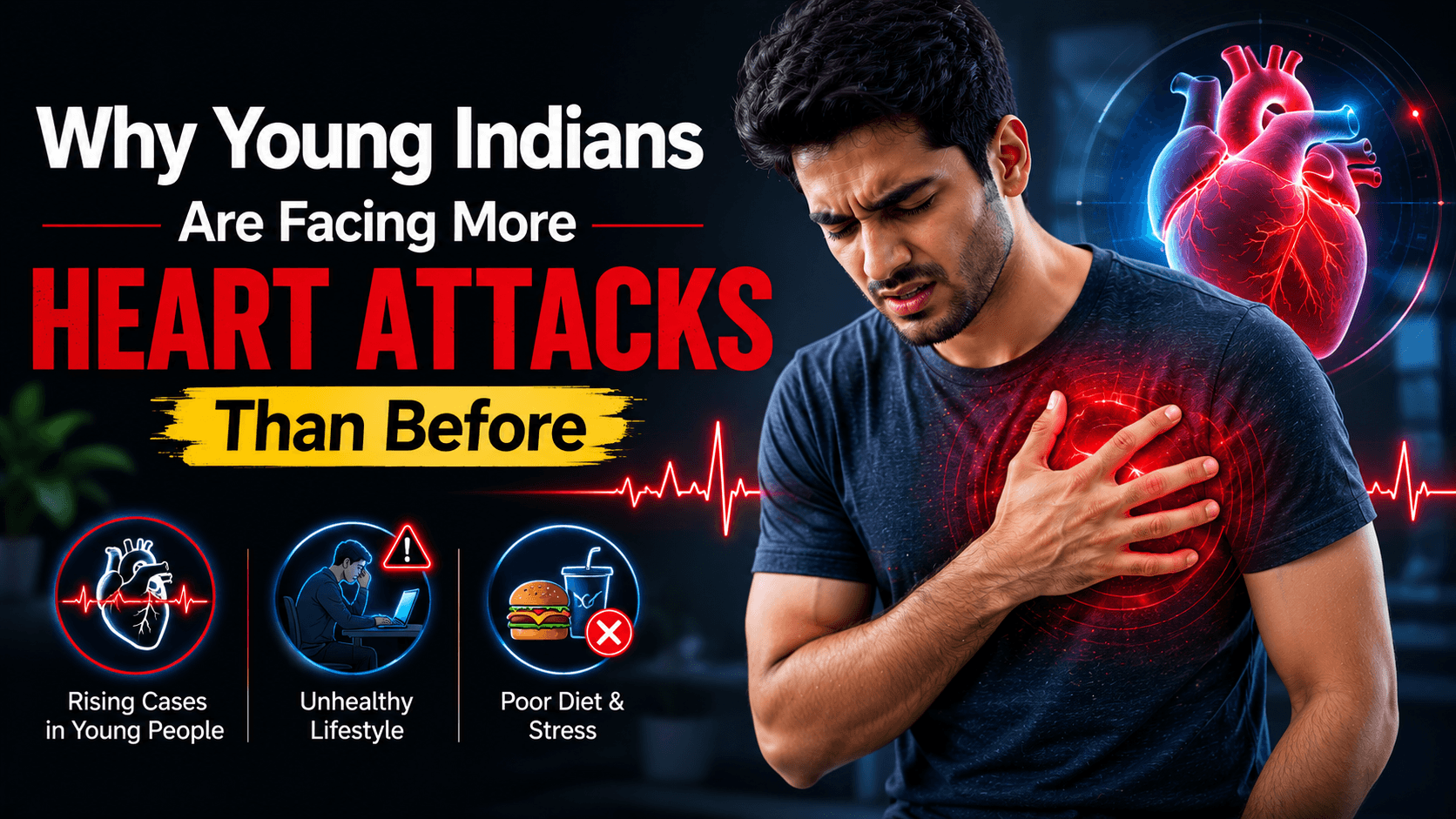
Understanding the Rising Risk of Heart Attacks Among Young Adults in India
A 32-year-old marketing executive collapses at his desk in Gurugram. A 28-year-old woman suffers a cardiac event during her morning run in Bengaluru. A 41-year-old IT professional dies of a heart attack at a family dinner in Pune.
These are not statistics pulled from a medical journal. Versions of these stories have been appearing in Indian newspapers and social media feeds with unsettling regularity over the past few years.
Heart attacks used to be something people associated with their fathers or grandfathers. The overweight uncle who smoked too much, the retired government officer with uncontrolled diabetes. Not the 30-something who hits the gym three times a week and seems perfectly fine.
But something has shifted. Heart attacks in young adults are rising in India, and the medical community is worried.
So what is actually going on? And more importantly, what can you do about it?
The Numbers Are Not Reassuring
India already carries one of the heaviest cardiovascular disease burdens in the world. But the age at which people are experiencing their first heart attack has been dropping steadily.
Studies from major cardiac hospitals in India show that roughly 25 to 30% of heart attack patients are now below the age of 45. Some research puts the average age of first heart attack in Indian men at nearly a decade younger than their Western counterparts.
The Indian Heart Association has noted that South Asians as an ethnic group are genetically predisposed to heart disease, developing it earlier and more aggressively than other populations. But genetics alone doesn't explain the recent spike. Something in how young Indians are living has changed and it's showing up in cardiology wards.
Why Are Heart Attacks Increasing in India Among Young People?
There's no single cause. It's a combination of lifestyle factors, biological predisposition, post-pandemic effects, and a healthcare system where preventive cardiology is still underdeveloped. Here's what the evidence points to.
1. Chronic Stress Has Become the New Normal
Ask any cardiologist in India's major cities what they're seeing, and stress comes up almost immediately.
Work pressure in India's competitive professional culture is relentless. Long hours, unstable contracts, the pressure of being in a global workforce while managing Indian family expectations it adds up. Chronic psychological stress elevates cortisol and adrenaline, which raise blood pressure, increase inflammation in artery walls, and trigger blood clotting activity.
Over months and years, this constant biochemical stress response quietly damages the heart. The attack that looks "sudden" to everyone else has actually been building for years.
2. Sedentary Lifestyles Hidden Behind Busy Schedules
Here's something worth thinking about. A person can work 10 hours a day, rush through meals, feel constantly "busy" and still be almost completely physically inactive.
Sitting for extended hours is now recognized as an independent risk factor for heart disease, even in people who exercise. An office worker who sits for 9 hours, commutes for 2, and sits through dinner has spent most of their waking life completely still.
Physical inactivity reduces HDL (good cholesterol), promotes weight gain around the abdomen, and accelerates arterial stiffness. These changes don't announce themselves. They compound silently over years until the heart can't compensate anymore.
3. Poor Sleep Is Doing Serious Cardiac Damage
Sleeping 5 to 6 hours because of late-night scrolling, deadlines, or a newborn baby feels normal in modern India. But for the heart, it's a serious ongoing injury.
Research consistently links chronic sleep deprivation to higher rates of hypertension, diabetes, obesity, and most directly heart attacks. Sleep is when the cardiovascular system repairs itself. Cut that window short repeatedly and the damage accumulates.
A study published in the European Heart Journal found that people who regularly sleep fewer than 6 hours a night have significantly higher rates of cardiac events. The risk is comparable to smoking in some analyses.
4. Junk Food, Ultra-Processed Diets, and Hidden Calories
Indian food culture has transformed dramatically over the past 15 to 20 years. Traditional home-cooked meals have given way to quick delivery apps, packaged snacks, sugar-loaded beverages, and frequent restaurant eating.
Ultra-processed foods are high in trans fats, sodium, refined sugar, and artificial additives all of which promote inflammation, raise LDL cholesterol, spike blood sugar, and contribute to arterial plaque buildup.
Young professionals eating at their desks or ordering late at night are often consuming far more harmful calories than they realize. And because they're busy and relatively young, they don't feel sick yet.
5. Smoking and Alcohol Among the Young
Smoking rates among young urban Indian men remain high, and the rise of hookah bars and social vaping has introduced a new generation to nicotine without fully understanding the cardiovascular cost.
Nicotine constricts blood vessels, reduces oxygen delivery to the heart, raises blood pressure, and accelerates atherosclerosis (hardening of the arteries). There is no safe amount of tobacco use for heart health.
Alcohol consumption, especially heavy binge drinking on weekends, also raises blood pressure and can trigger dangerous heart rhythm abnormalities called arrhythmias. What seems like harmless socializing creates real cardiac stress, especially when combined with other risk factors.
6. Post-COVID Cardiac Effects
This one is relatively new but increasingly important. Multiple studies since 2021 have found that COVID-19 infection — even mild cases can cause lingering inflammation of the heart muscle (myocarditis), damage to the inner lining of blood vessels (endothelial dysfunction), and elevated clotting tendency.
These effects don't always produce immediate symptoms. But in a person who already has undetected early heart disease, a post-COVID inflammatory state can be the trigger that pushes the heart over the edge.
Cardiologists across India have reported seeing young patients with new cardiac symptoms in the months following a COVID-19 infection many of whom had no previous history of heart disease.
7. Undetected Risk Factors in a Generation That Doesn't Get Checkups
Here's a quiet epidemic inside the epidemic. The majority of young Indians have never had a cardiac risk assessment. No lipid profile. No blood sugar check. No blood pressure measurement outside of a gym machine.
Many of the young people dying from heart attacks are found to have had dangerously high cholesterol, elevated blood sugar indicating pre-diabetes, or hypertension for years before the event. They simply never knew.
High cholesterol doesn't hurt. High blood pressure rarely causes obvious symptoms. This is precisely why they're called silent killers. Without routine screening, there's no warning.
Certain blood groups also carry a higher baseline risk for cardiovascular disease, which compounds these lifestyle-driven risks. The Blood Group and Disease Risk Chart Explained breaks down how blood type A and AB individuals face statistically elevated heart disease risk — information that's especially relevant for young adults building preventive health habits.
8. Gym Overexertion Without Cardiac Screening
This one surprises people. Going to the gym is supposed to protect your heart, not threaten it. And regular moderate exercise absolutely does.
But there's a rising pattern of young Indian men pushing extremely hard in the gym heavy lifting, high-intensity interval training, pre-workout stimulants without ever getting a cardiac evaluation first.
When a person has an undetected structural heart defect or early arterial plaque, extreme exertion can trigger the plaque to rupture, causing an immediate heart attack. This is what's behind many of the "died at the gym" stories that have circulated in Indian media.
Exercise is essential. But extreme exertion without knowing your cardiac baseline is a risk that's simply not worth taking.
Who Is Most at Risk? Warning Signs to Watch
You're at higher risk of a heart attack in young adulthood if you:
-
Have a family history of early heart disease (father or brother under 55, mother or sister under 65)
-
Smoke, even occasionally
-
Have a sedentary desk job with minimal physical activity
-
Regularly sleep under 6 hours
-
Are overweight, especially with abdominal fat
-
Have uncontrolled stress and no outlet for it
-
Haven't had a blood lipid or blood sugar test in the last two years
-
Had COVID-19 and have noticed new shortness of breath, fatigue, or palpitations since
The warning signs before a heart attack that young people often dismiss:
-
Chest tightness or pressure during exertion
-
Unexplained fatigue that doesn't improve with rest
-
Shortness of breath during activity that previously felt easy
-
Palpitations or irregular heartbeat episodes
-
Dizziness or near-fainting during exercise
-
Jaw, neck, or left arm discomfort
These are not to be brushed off as "stress" or "acidity." If you experience any of these, see a cardiologist.
What Can You Actually Do to Protect Your Heart?
Get a Basic Cardiac Screening Done
A lipid profile (cholesterol test), fasting blood sugar, blood pressure measurement, and an ECG covers the basics. At most private labs in India this costs between INR 800 and INR 2,000. At government hospitals, much less. It should be done annually after age 25, or earlier if you have any risk factors.
Fix Your Sleep Before You Fix Your Diet
Most people know they should eat better. Far fewer take their sleep seriously enough. Aim for 7 to 8 hours of actual sleep, not just time in bed. Poor sleep makes every other risk factor worse.
Move More - Not Harder
You don't need an extreme fitness routine. 30 to 45 minutes of moderate physical activity five days a week — walking, cycling, swimming — is what evidence supports for cardiac protection. If you want to train intensely, get a cardiac evaluation first.
Manage Stress Like It's a Medical Issue Because It Is
Meditation, therapy, proper time boundaries at work, genuine rest — these are not soft lifestyle choices. They are cardiovascular interventions. Chronic stress kills heart muscle. Treat stress management as seriously as you treat your diet.
Know Your Family History
If a close male relative had a heart attack before 55, or a close female relative before 65, you carry elevated genetic risk. Tell your doctor. Get screened earlier. Don't wait.
Understanding your complete health picture, including how blood group affects cardiovascular risk and what lifestyle adjustments matter most for your type, is covered in the Best Blood Group for Immunity and Health article — a useful read for anyone building a preventive health routine.
Heart Attack Prevention: Quick Action Checklist
|
Action |
Frequency |
Cost (Approx.) |
|
Lipid profile (cholesterol) |
Annually |
INR 300 to INR 600 |
|
Fasting blood sugar |
Annually |
INR 50 to INR 150 |
|
Blood pressure check |
Every 6 months |
Free at most clinics |
|
ECG |
Annually after 30 |
INR 200 to INR 500 |
|
Cardiac stress test (if risk factors) |
As advised |
INR 1,500 to INR 3,000 |
|
Moderate exercise |
5 days/week |
Free |
|
Sleep 7 to 8 hours |
Daily |
Free |
FAQs
Q: Why are young people getting heart attacks in India?
Multiple overlapping causes chronic stress, poor sleep, sedentary lifestyles, unhealthy diets, smoking, undetected high cholesterol, post-COVID cardiac effects, and genetic predisposition. South Asians as a group develop heart disease earlier than other ethnicities.
Q: What is the main cause of sudden heart attack in young adults?
Most sudden heart attacks in young adults are caused by a rupture of arterial plaque a buildup of cholesterol and inflammation in artery walls that has been forming silently for years. The rupture triggers a blood clot that blocks blood flow to the heart.
Q: What age do heart attacks start in India?
Indian patients are experiencing first heart attacks at younger ages than Western populations. Roughly 25 to 30% of heart attack patients in major Indian hospitals are now under 45.
Q: Can gym workouts cause heart attacks in young people?
Extreme gym exertion can trigger a heart attack in someone with undetected arterial plaque or a structural heart defect. Exercise itself is protective the risk comes from intense training without knowing your cardiac baseline. A pre-workout cardiac evaluation is strongly recommended for anyone training intensely.
Q: What are the early warning signs of a heart attack in young adults?
Chest pressure or tightness during exertion, unexplained fatigue, shortness of breath, palpitations, dizziness, and pain or discomfort in the jaw, neck, or left arm. These are often dismissed as stress or acidity they should not be.
Q: How can young Indians prevent heart attacks?
Annual cardiac screenings (lipid profile, blood sugar, blood pressure, ECG), 7 to 8 hours of sleep, regular moderate exercise, a diet low in ultra-processed foods, stress management, and not smoking. Knowing your family history and acting on it early is critical.
Q: Did COVID-19 increase heart attack risk in young people?
Yes. Multiple studies have found that COVID-19 infection can cause lasting cardiovascular inflammation, endothelial damage, and elevated clotting tendency all of which increase heart attack risk, even in people with no prior cardiac history.
The Bottom Line
Young Indians are having more heart attacks because modern life has quietly become very hard on the heart. Chronic stress, terrible sleep, processed food, long hours of sitting, smoking, and a culture that doesn't prioritize preventive health — it's all hitting at once.
The most dangerous part? Most of the damage is invisible until it isn't.
Don't wait for chest pain to start thinking about your heart. Get a basic checkup. Fix your sleep. Move your body. Manage your stress. And if you have a family history of early heart disease, treat that information like the warning it is.
Your heart has been working without a single break since before you were born. It deserves at least one annual checkup.
Disclaimer: This article is for informational and educational purposes only. It is not a substitute for professional medical advice, diagnosis, or treatment. If you are experiencing chest pain or cardiac symptoms, seek emergency medical care immediately
Suggested Articles
 Fitness
Opinion | Fitness Influencers Are Not Making Men More Fit
Fitness influencers promise better bodies and faster results, but are they actually making men fitter? Explore the im...
Read Article arrow_forward Ayurvedic Tips
Ayurvedic Tips
Ayurvedic Tips
 Ayurvedic Tips
Beyond Age: Why 5 Key Cellular Metrics Truly Dictate Your Longevity (2026 Science Explained)
Go beyond chronological age with 5 key cellular metrics linked to biological aging and longevity, and learn lifestyle...
Read Article arrow_forward