
Blood Group Compatibility for Pregnancy: Chart, Rh Factor & What Couples Should Know
Planning a pregnancy comes with plenty of questions about nutrition, prenatal vitamins, genetic health, and medical checkups. One question that often comes up is: Does blood group compatibility between partners matter for pregnancy?
The good news is that differences in ABO blood groups (A, B, AB, or O) generally do not prevent a couple from conceiving or having a healthy pregnancy.
The blood-group issue doctors pay particular attention to during pregnancy is the Rh factor, especially when the pregnant person is RhD-negative and the baby may be RhD-positive. In some situations, this can lead to RhD sensitization, which can affect a current or future pregnancy if it is not identified and managed.
This guide explains blood group compatibility for pregnancy, including ABO and Rh factors, compatibility charts, Rh incompatibility, anti-D immunoglobulin, and what couples should know before and during pregnancy.
Blood Group Compatibility for Pregnancy: The Quick Answer
Blood group differences between partners usually do not prevent pregnancy.
There are two important parts of a person's blood type:
- ABO group: A, B, AB, or O
- Rh factor: Positive (+) or negative (-)
For pregnancy, the Rh factor can be particularly important.
For example, if the pregnant person is RhD-negative and the biological father is RhD-positive, the baby may be RhD-positive. If fetal RhD-positive red blood cells enter the mother's bloodstream, her immune system can sometimes produce antibodies against them. This is called RhD sensitization or alloimmunization.
Modern prenatal screening and preventive treatment can greatly reduce the risk of complications.
ABO Blood Group and Rh Factor: What's the Difference?
Your blood type is usually written using both the ABO group and Rh factor.
For example:
- A+
- A-
- B+
- B-
- AB+
- AB-
- O+
- O-
ABO blood group
The ABO system classifies blood as:
- A
- B
- AB
- O
It is determined by specific antigens on red blood cells.
Rh factor
The Rh system includes several antigens, with RhD being the most clinically important one in pregnancy.
If the RhD antigen is present, the person is generally described as Rh-positive.
If it is absent, the person is Rh-negative.
So someone with O-negative blood has:
ABO group O + RhD-negative
And someone with A-positive blood has:
ABO group A + RhD-positive
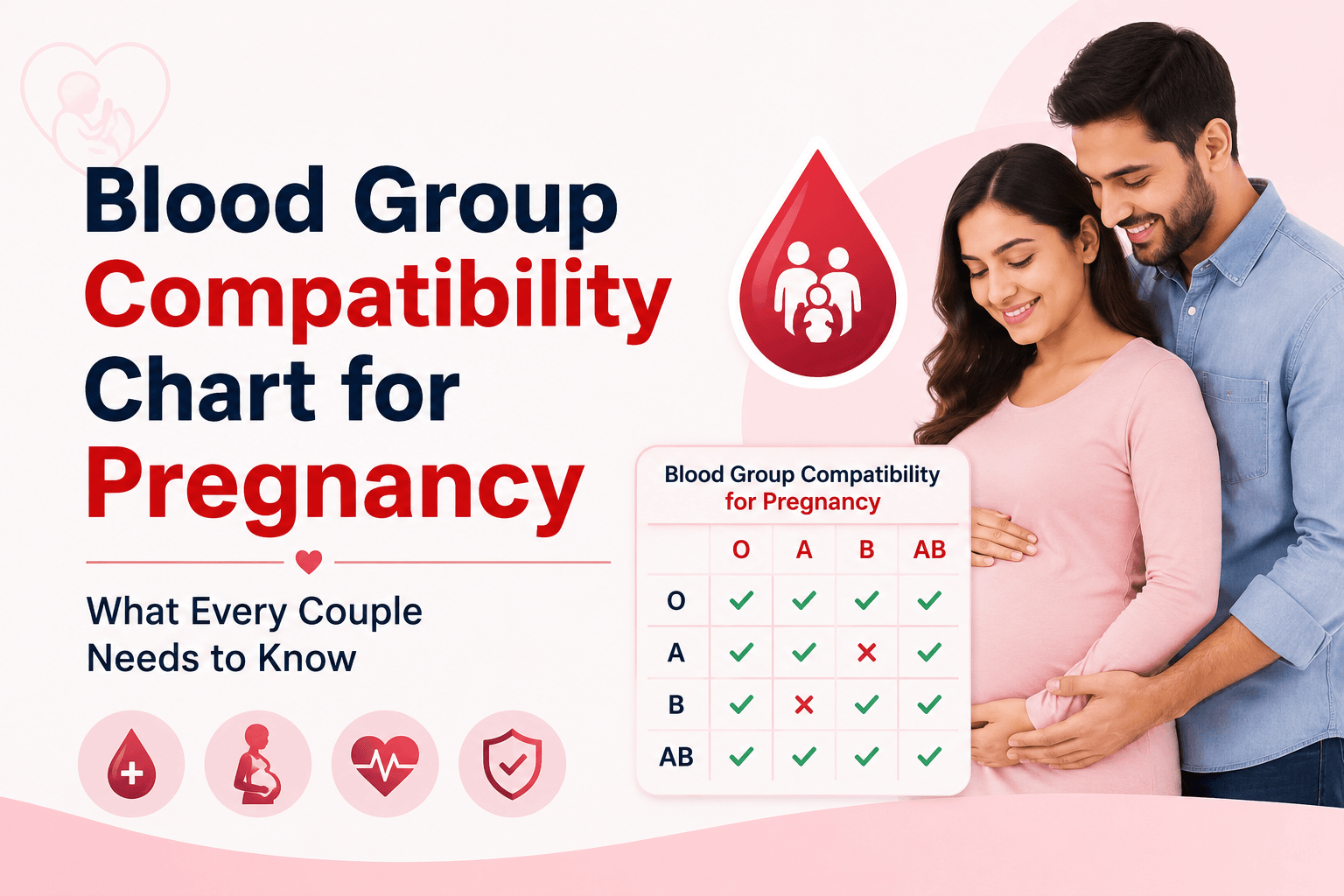
Blood Group Compatibility Chart for Pregnancy
The most important thing to understand is that ABO differences between partners generally do not prevent conception.
The RhD combination is more relevant when assessing the risk of RhD sensitization.
Rh Compatibility Chart
| Pregnant Person | Biological Father | Possible Baby RhD Status | Main Consideration |
|---|---|---|---|
| Rh-positive | Rh-positive | Rh-positive or Rh-negative | RhD incompatibility is not expected |
| Rh-positive | Rh-negative | Rh-positive or Rh-negative | RhD incompatibility is not expected |
| Rh-negative | Rh-negative | Rh-negative | RhD incompatibility is not expected |
| Rh-negative | Rh-positive | Rh-positive or Rh-negative | RhD sensitization may be possible if baby is Rh-positive |
The key combination
The combination that requires particular attention is:
Rh-negative pregnant person + Rh-positive biological father
The baby may inherit RhD-positive blood from the father.
However, this does not mean the pregnancy will automatically have complications.
The pregnant person's healthcare team can determine whether RhD testing, antibody screening, and anti-D prophylaxis are appropriate.
Does Blood Group Compatibility Matter for Marriage?
This is a common question, particularly when couples search for blood group compatibility for marriage.
The short answer is no.
Couples do not generally need to have matching ABO blood groups to marry or conceive a child.
For example:
- A and B can have children.
- O and A can have children.
- AB and O can have children.
- Two people with different ABO groups can have a completely healthy pregnancy.
Blood group matching is not generally a requirement for marriage or fertility.
The more important issue is understanding the RhD factor during pregnancy, particularly when the pregnant person is RhD-negative.
So if you're searching for a blood group chart for marriage, don't interpret the chart as a list of blood types that are "safe" or "unsafe" for marriage.
Instead, think of it as information that can help couples and their healthcare providers understand pregnancy-related RhD considerations.
Can Blood Group Incompatibility Affect Pregnancy?
It depends on what type of incompatibility is being discussed.
ABO incompatibility
ABO differences between a mother and baby can sometimes contribute to newborn jaundice or anemia, particularly when the mother has blood group O and the baby has A or B blood.
However, ABO incompatibility is generally much less likely than RhD incompatibility to cause severe pregnancy-related problems.
It usually does not affect the ability to become pregnant.
RhD incompatibility
RhD incompatibility can become clinically important when:
Mother = RhD-negative
and
Baby = RhD-positive
If the mother becomes sensitized, her immune system can produce anti-D antibodies.
These antibodies can cross the placenta during a later pregnancy and attack RhD-positive fetal red blood cells.
This can cause hemolytic disease of the fetus and newborn (HDFN).
What Happens if the Mother Is Rh-Negative and the Father Is Rh-Positive?
This is one of the most searched pregnancy blood-group combinations.
Suppose:
- Mother: O-negative
- Father: O-positive
The baby's RhD status cannot be determined simply by looking at the mother's blood type. Depending on the father's genetics, the baby may be RhD-positive or RhD-negative.
If the baby is RhD-positive, there is a potential for RhD incompatibility.
But this does not mean the baby will automatically be harmed.
The important steps are:
- Determine the mother's blood group and RhD status.
- Perform an antibody screen during pregnancy.
- Identify whether the mother has already been sensitized.
- Consider anti-D immunoglobulin when clinically appropriate.
- Monitor the pregnancy according to the obstetric team's recommendations.
With appropriate prenatal care, RhD-related complications can often be prevented or managed.
What Is RhD Sensitization?
RhD sensitization happens when an RhD-negative person's immune system is exposed to RhD-positive red blood cells and produces anti-D antibodies.
During pregnancy, the fetal and maternal bloodstreams are usually separated. However, small amounts of fetal blood can sometimes enter the maternal circulation.
This can happen during events such as:
- Childbirth
- Miscarriage
- Abortion
- Ectopic pregnancy
- Vaginal bleeding in certain circumstances
- Abdominal trauma
- Amniocentesis
- Chorionic villus sampling (CVS)
- Other procedures or events that may cause fetal-maternal blood mixing
Once someone has developed clinically significant anti-D antibodies, those antibodies can persist.
This is why identifying RhD-negative pregnancies early is important.
Can Rh Incompatibility Affect the First Pregnancy?
It can, but the risk is not simply determined by whether it is the first pregnancy.
A common misconception is that Rh incompatibility cannot affect a first pregnancy.
In reality, an RhD-negative person may already have anti-D antibodies because of a previous pregnancy, miscarriage, transfusion, or another exposure.
Sensitization can also occur during the current pregnancy after certain events.
Therefore, antibody screening is important even during a first pregnancy.
How Is RhD Sensitization Prevented?
For eligible RhD-negative pregnant people who have not already developed anti-D antibodies, doctors may recommend anti-D immunoglobulin.
Anti-D immunoglobulin helps prevent the mother's immune system from becoming sensitized to RhD-positive fetal red blood cells.
The exact timing and number of doses can vary according to clinical circumstances and local guidelines.
Anti-D prophylaxis may be considered:
- During pregnancy as routine antenatal prophylaxis
- After childbirth when the newborn is RhD-positive
- After certain pregnancy-related bleeding events
- After miscarriage or abortion in circumstances where prophylaxis is indicated
- After abdominal trauma
- After certain invasive prenatal procedures
Your obstetrician or maternity team should determine whether anti-D is appropriate and when it should be given.
What If RhD Sensitization Has Already Happened?
Anti-D immunoglobulin is used to prevent sensitization. It does not reverse established RhD sensitization.
If antibody screening shows that a pregnant person has already developed clinically significant antibodies, the pregnancy may require additional monitoring.
Depending on the situation, doctors may use:
- Repeat maternal antibody testing
- Fetal monitoring
- Ultrasound assessment
- Doppler ultrasound to assess fetal blood flow
- Specialist maternal-fetal medicine care
- Intrauterine transfusion in severe cases
- Planned early delivery when medically necessary
The exact management depends on the antibody level, pregnancy stage, fetal status, and other clinical factors.
Does ABO Blood Group Compatibility Affect Fertility?
Generally, no.
Having different ABO blood groups does not normally prevent conception.
For example, an A-positive person and a B-positive person can conceive a child.
Similarly, an O-negative person and an A-positive person can conceive.
Blood group is therefore not a fertility test.
If a couple is having difficulty conceiving, they should discuss fertility evaluation with a qualified healthcare professional rather than focusing on ABO blood-group compatibility.
ABO Blood Group Compatibility: What Can Happen to the Baby?
ABO incompatibility is most commonly discussed when:
Mother = blood group O
and
Baby = blood group A or B
Maternal antibodies can sometimes react with the baby's red blood cells.
In some newborns, this can contribute to:
- Jaundice
- Anemia
- Increased bilirubin levels
Many cases are mild, but newborns with significant jaundice or anemia require appropriate medical evaluation and treatment.
Importantly, ABO incompatibility is not a reason to avoid pregnancy or marriage.
Blood Group Testing Before and During Pregnancy
If you're planning pregnancy, knowing your blood group can be useful.
Before pregnancy
You can discuss your:
- ABO blood group
- RhD status
- Previous pregnancy history
- Previous transfusions
- Previous sensitizing events
with your healthcare provider.
During the first prenatal visit
Blood testing commonly includes:
- ABO blood group
- RhD status
- Antibody screening
The antibody screen helps determine whether the pregnant person has antibodies that could affect the fetus.
During pregnancy
If the person is RhD-negative and has not been sensitized, the healthcare team can determine whether routine anti-D prophylaxis is appropriate.
After delivery
When indicated, the baby's RhD status and the mother's clinical situation help determine whether postnatal anti-D prophylaxis is needed.
Rh-Negative Pregnancy in India: What Should You Know?
Rh-negative blood is less common in India than Rh-positive blood.
That makes it especially useful for people to know their blood group and communicate their RhD status to their healthcare provider during pregnancy.
However, being Rh-negative is not a disease and does not mean that pregnancy will be unsafe.
The important thing is appropriate prenatal screening and medical follow-up.
If you don't know your blood group yet, you can read our guide on how to find out your blood group.
Quick Blood Group Compatibility Guide for Couples
| Couple's Blood Groups | Pregnancy Consideration |
|---|---|
| A+ and B+ | ABO difference does not prevent pregnancy |
| A+ and O+ | No RhD incompatibility concern |
| A- and A+ | RhD status should be discussed during pregnancy |
| B- and B+ | RhD status should be discussed during pregnancy |
| O- and O+ | Baby may be RhD-positive; RhD monitoring may be needed |
| O- and A+ | Baby may be RhD-positive; RhD monitoring may be needed |
| AB- and O+ | Baby may be RhD-positive; RhD monitoring may be needed |
| Any two different ABO groups | Usually not a fertility concern |
Important: This is a general educational guide, not a pregnancy risk calculator. Individual management depends on the mother's RhD status, antibody screen, pregnancy history, and clinical circumstances.
What Blood Group Compatibility Does NOT Mean
There are several misconceptions surrounding blood group compatibility.
Myth: Couples must have compatible blood groups to conceive
False.
Different ABO blood groups generally do not prevent conception.
Myth: Rh-negative women cannot have healthy babies with Rh-positive men
False.
An Rh-negative pregnant person with an Rh-positive partner can have a healthy pregnancy. The pregnancy may simply require appropriate RhD screening and preventive care.
Myth: Blood group determines whether a couple should marry
False.
ABO blood group matching is not generally a medical requirement for marriage.
Myth: Rh incompatibility always causes problems
False.
RhD incompatibility creates a potential risk of sensitization; it does not mean complications will definitely occur.
Frequently Asked Questions
Which blood group combination is most important in pregnancy?
The combination that deserves particular attention is an RhD-negative pregnant person with an RhD-positive biological father, because the baby may be RhD-positive.
This does not mean complications are inevitable. Appropriate screening and preventive care can significantly reduce the risk.
Can an O-negative mother and O-positive father have a healthy baby?
Yes.
An O-negative mother and O-positive father can have a healthy baby. Because the baby may be RhD-positive, the mother's healthcare team may recommend RhD antibody screening and anti-D prophylaxis when appropriate.
What happens if blood groups are not compatible during pregnancy?
ABO differences usually do not prevent pregnancy and are generally less concerning than RhD incompatibility.
If an RhD-negative mother becomes sensitized and the fetus is RhD-positive, maternal antibodies can potentially cause fetal or newborn anemia and other complications. This is why prenatal screening is important.
Is blood group matching necessary before marriage in India?
No, ABO blood-group matching is generally not required before marriage.
The more relevant issue is understanding RhD status during pregnancy, especially if the pregnant person is RhD-negative.
Does blood group affect the chances of getting pregnant?
Generally, no.
ABO or RhD blood group does not normally determine fertility.
How many anti-D injections are needed during pregnancy?
There is no single number that applies to everyone.
The timing and number of anti-D doses depend on the healthcare system, pregnancy stage, previous sensitizing events, delivery findings, and clinical circumstances.
Follow the schedule recommended by your obstetrician.
Can Rh incompatibility affect the first pregnancy?
It can, particularly if the mother was already sensitized before or during the pregnancy.
That's why antibody screening is important from early pregnancy rather than assuming the first pregnancy is automatically protected.
Should both partners know their blood groups before pregnancy?
Knowing both partners' blood groups can be useful, particularly for understanding RhD status.
However, a difference in ABO blood groups is not normally a reason to delay or avoid pregnancy.
Final Takeaway
Blood group compatibility is usually not a barrier to pregnancy.
The most important blood-group issue during pregnancy is RhD status, particularly when the pregnant person is RhD-negative and the biological father is RhD-positive.
If you are RhD-negative:
- Tell your healthcare provider early in pregnancy.
- Complete the recommended antibody screening.
- Ask whether anti-D prophylaxis is appropriate for you.
- Follow your obstetrician's monitoring and treatment recommendations.
If you're planning a pregnancy, don't worry about whether your ABO blood groups "match." Instead, focus on preconception care, prenatal screening, RhD status, and regular medical follow-up.
With appropriate care, an RhD-negative pregnancy can often progress safely and result in a healthy baby.
Medical disclaimer: This article is for general educational purposes and does not replace individual medical advice, diagnosis, or treatment. Pregnancy care varies according to individual circumstances and local clinical guidelines. If you are pregnant, planning pregnancy, RhD-negative, or have a positive antibody screen, speak with a qualified obstetrician or healthcare professional.
Suggested Articles
 Ayurvedic Tips
 Healthcare News
Blood Group Importance in Emergency Situations - Why It Can Literally Save Your Life
Your blood group can mean the difference between life and death in an emergency. Here's why knowing your blood type i...
Read Article arrow_forward
Ayurvedic Tips
7 Critical Cellular Markers for True Anti-Aging (2026 Guide)
Unlock the secrets to true anti-aging by understanding 7 critical cellular health markers. This 2026 guide reveals ho...
Read Article arrow_forward Healthy Lifestyle
Cellular Longevity: 5 Essential Anti-Aging Markers Guide
Want to live longer and healthier? Discover the 5 crucial cellular markers that drive anti-aging. Learn how to unders...
Read Article arrow_forward